Menopause is often misunderstood as something that only affects women who are inactive, unhealthy, or approaching old age. In reality, even the fittest, strongest, and most disciplined women experience menopause—and its effects can be just as powerful. Elite athletes, yoga instructors, marathon runners, and women who have spent decades prioritizing fitness all face the same biological transition.
So why does menopause affect everyone, regardless of fitness level? And more importantly, how can physically active women navigate menopause with strength, confidence, and control?
This article explores the science behind menopause, why fitness alone can’t prevent it, and how active women can adapt their lifestyle to stay healthy, energetic, and empowered through this stage of life.
Understanding Menopause: A Natural Biological Transition
Menopause is not a disease—it’s a natural biological process that marks the end of a woman’s reproductive years. It is officially diagnosed after 12 consecutive months without a menstrual period, usually occurring between ages 45 and 55.
Menopause happens because the ovaries gradually stop producing the hormones estrogen and progesterone, which regulate menstruation, fertility, bone health, metabolism, mood, and many other bodily functions.
Key Stages of Menopause
- Perimenopause – The transitional phase that can last 5–10 years
- Menopause – One full year without periods
- Postmenopause – The years after menopause
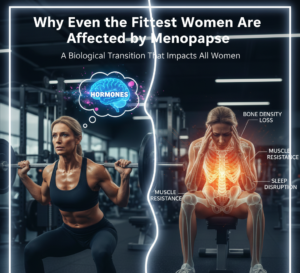
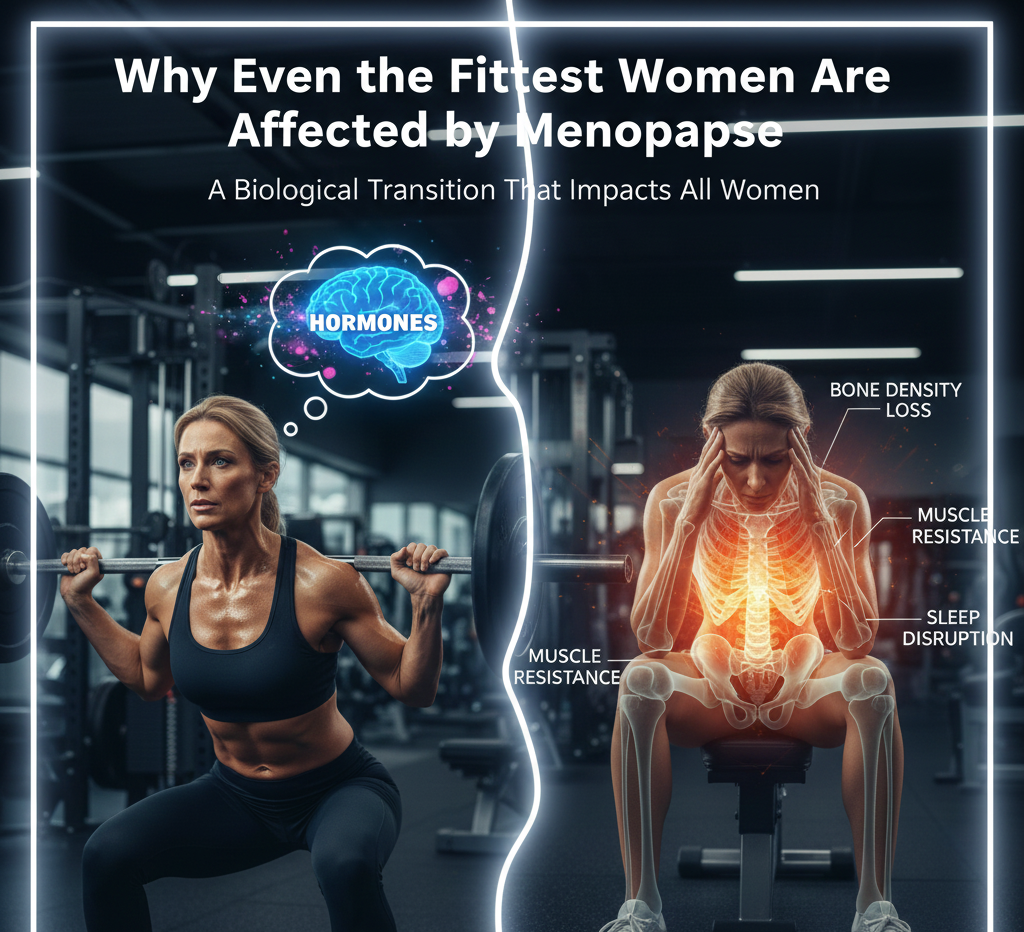
Why Even the Fittest Women Are Affected by Menopause
Even women who are extremely fit will go through all these stages because menopause is driven by hormonal changes, not lifestyle alone.
Why Fitness Can’t Prevent Menopause
Regular exercise provides incredible health benefits—but it cannot override biology. Here’s why:
1. Menopause Is Hormonal, Not Lifestyle-Based
Fitness improves muscle strength, cardiovascular health, insulin sensitivity, and mental well-being—but it does not stop the ovaries from aging.
As women age:
- The number of eggs in the ovaries declines
- Estrogen production naturally decreases
- Hormonal signaling changes at a cellular level
No amount of running, weightlifting, or clean eating can stop this process.
2. Hormonal Decline Affects Even Elite Athletes
Studies show that female athletes experience menopause symptoms just like non-athletes, including:
- Hot flashes
- Night sweats
- Sleep disturbances
- Mood changes
- Joint pain
- Fatigue
In some cases, very intense training may even worsen symptoms by increasing cortisol (the stress hormone), which further disrupts hormonal balance.
3. Fitness Doesn’t Fully Protect Metabolism During Menopause
One of the most frustrating aspects of menopause for fit women is unexpected weight gain, especially around the abdomen.
Why this happens:
- Estrogen helps regulate fat distribution
- Lower estrogen encourages fat storage around the belly
- Muscle mass naturally declines with age
- Metabolic rate slows
Even women who have maintained the same workout routine for years may notice:
- Increased body fat
- Loss of muscle tone
- Slower recovery
This isn’t failure—it’s physiology.
Common Menopause Symptoms in Fit Women
Many physically active women are surprised when menopause symptoms interfere with their performance and daily life.
Physical Symptoms
- Hot flashes and night sweats
- Joint stiffness and muscle soreness
- Reduced endurance
- Slower recovery after workouts
- Increased risk of injury
- Bone density loss
Mental and Emotional Symptoms
- Brain fog
- Mood swings
- Anxiety or irritability
- Reduced motivation
- Sleep problems
Fitness helps reduce severity, but it doesn’t eliminate these symptoms entirely.
The Hidden Challenge: Identity and Control
For many fit women, menopause is not just physical—it’s emotional.
Women who are used to:
- Feeling strong
- Being disciplined
- Having control over their bodies
May struggle when:
- Workouts stop delivering the same results
- Energy levels drop unexpectedly
- The body feels unfamiliar
This can lead to frustration, self-blame, or the belief that something is “wrong.”
The truth is simple but powerful:
Menopause is not a failure of fitness—it’s a shift in biology.
How Fitness Actually Helps During Menopause
While fitness can’t stop menopause, it remains one of the most effective tools for managing symptoms and protecting long-term health.
1. Strength Training Becomes Essential
During menopause, women lose muscle and bone density more rapidly.
Benefits of strength training:
- Preserves muscle mass
- Strengthens bones
- Improves metabolism
- Reduces injury risk
Recommendation:
2–4 sessions per week focusing on compound movements like squats, deadlifts, lunges, and push-ups.
2. Cardio Needs Balance, Not Excess
Cardio supports heart health and mood—but too much intense cardio can increase cortisol, worsening fatigue and belly fat.
Better options:
- Brisk walking
- Cycling
- Swimming
- Zone-2 cardio
- Short HIIT sessions (1–2 times/week)
3. Recovery Is Non-Negotiable
Menopausal bodies require more recovery time.
Key recovery strategies:
- Quality sleep
- Stretching and mobility work
- Yoga or Pilates
- Rest days without guilt
Listening to your body becomes a strength, not a weakness.
Nutrition Changes Every Fit Woman Must Accept
What worked at 30 may not work at 50—and that’s okay.
Protein Becomes a Priority
Protein helps:
- Preserve muscle
- Improve satiety
- Support metabolism
Aim for 1.2–1.6 g of protein per kg of body weight daily.
Support Hormone Balance with Smart Fats
Healthy fats help hormone production:
- Olive oil
- Avocados
- Nuts and seeds
- Fatty fish
Manage Blood Sugar Carefully
Menopause increases insulin resistance.
Focus on:
- Fiber-rich foods
- Whole grains
- Vegetables
- Balanced meals
Avoid extreme dieting—it can worsen symptoms.
Bone Health: A Silent but Serious Issue
Estrogen protects bones. When it declines, the risk of osteoporosis increases—even in athletic women.
Protect bone health by:
- Strength training
- Adequate calcium intake
- Vitamin D
- Avoiding excessive calorie restriction
Bone loss is silent until a fracture occurs—prevention is critical.
Mental Health and Menopause
Fitness supports mental health, but hormonal shifts can still affect mood.
Helpful strategies:
- Mindfulness practices
- Breathing exercises
- Stress management
- Social support
- Professional guidance if needed
There is no shame in seeking help during this transition.
Rethinking Fitness Goals During Menopause
Instead of chasing:
- A younger body
- Old performance numbers
- Unrealistic expectations
Shift toward:
- Strength
- Energy
- Longevity
- Confidence
- Overall well-being
Menopause invites women to train smarter, not harder.
Menopause as a New Chapter, Not an Ending
Some of the strongest, healthiest, and happiest women report feeling more confident after menopause—once they stop fighting their bodies and start working with them.
This phase can bring:
- Greater self-awareness
- Emotional maturity
- Freedom from menstrual cycles
- A deeper connection to health
Fitness during menopause isn’t about control—it’s about adaptation and respect for your changing body.
Final Thoughts
Even the fittest women are affected by menopause because hormones—not habits—drive this transition. Fitness does not fail you during menopause; it simply needs to evolve.
With the right approach to:
- Exercise
- Nutrition
- Recovery
- Mindset
Women can remain strong, vibrant, and healthy well into midlife and beyond.
Menopause is not the end of fitness—it’s the beginning of a wiser, more sustainable version of it
Q1: What is menopause?
Answer:
Menopause is a natural biological stage in a woman’s life when menstrual periods permanently stop. It is officially diagnosed after 12 consecutive months without a period and usually occurs between the ages of 45 and 55. Menopause happens due to a decline in estrogen and progesterone hormones.
Q2: Why does menopause affect even the fittest women?
Answer:
Menopause is driven by hormonal changes, not lifestyle or fitness levels. Even the most physically active women experience menopause because ovarian aging and estrogen decline are natural biological processes that exercise cannot prevent.
Q3: Can regular exercise delay or prevent menopause?
Answer:
No, regular exercise cannot delay or prevent menopause. While fitness improves overall health and may reduce symptom severity, it cannot stop the hormonal changes that cause menopause.
Q4: Do fit women experience menopause symptoms differently?
Answer:
Fit women may experience slightly milder symptoms, but they still face common menopause issues such as hot flashes, sleep problems, joint pain, fatigue, mood changes, and reduced recovery capacity.
Q5: Why do fit women gain weight during menopause?
Answer:
Weight gain during menopause occurs due to lower estrogen levels, slowed metabolism, muscle loss, and increased insulin resistance. Fat tends to accumulate around the abdomen even when exercise routines remain unchanged.
Q6: Does menopause reduce athletic performance?
Answer:
Yes, menopause can temporarily reduce endurance, strength, and recovery speed due to hormonal shifts, muscle loss, and increased inflammation. However, proper training adjustments can help maintain performance.
Q7: What type of exercise is best during menopause?
Answer:
Strength training is the most important form of exercise during menopause. It helps preserve muscle mass, support bone health, boost metabolism, and reduce injury risk. Balanced cardio and adequate recovery are also essential.
Q8: Why is recovery more important during menopause?
Answer:
Hormonal changes increase fatigue and slow muscle repair. Overtraining can raise cortisol levels, worsen symptoms, and lead to burnout. Rest days, sleep, stretching, and stress management become critical.
Q9: How should nutrition change during menopause?
Answer:
Women should increase protein intake, focus on healthy fats, manage blood sugar with fiber-rich foods, and avoid extreme calorie restriction. Nutrition during menopause should support hormones, muscles, and bones.
Q10: Why is bone health a major concern in menopause?
Answer:
Estrogen protects bone density. When estrogen declines during menopause, the risk of osteoporosis increases—even in athletic women. Strength training, calcium, vitamin D, and proper nutrition help prevent bone loss.
Q11: Can fitness help manage menopause symptoms?
Answer:
Yes, fitness significantly helps manage menopause symptoms by improving mood, sleep, cardiovascular health, muscle strength, and mental clarity. It reduces symptom severity but does not eliminate menopause itself.
Q12: How does menopause affect mental health?
Answer:
Hormonal fluctuations can cause mood swings, anxiety, brain fog, and sleep disturbances. Exercise, mindfulness, stress management, and emotional support play a vital role in mental well-being during menopause.
Q13: Why do many fit women feel frustrated during menopause?
Answer:
Fit women are used to controlling their bodies through discipline and routine. When menopause changes results despite effort, it can cause emotional stress. Understanding that this is biological—not personal failure—helps shift mindset.
Q14: Should fitness goals change during menopause?
Answer:
Yes. Instead of focusing on youth-based performance goals, women should prioritize strength, energy, longevity, mobility, and overall health. Training smarter becomes more effective than training harder.
Q15: Is menopause the end of fitness for women?
Answer:
No. Menopause is not the end of fitness—it is a new phase that requires adaptation. With the right approach, women can remain strong, active, confident, and healthy well into later life.
Menopause & Fitness – Comparison Chart
| Aspect | Before Menopause | During / After Menopause |
| Hormone Levels | Estrogen & progesterone stable | Estrogen sharply declines |
| Effect of Fitness | Exercise gives fast results | Results slow down despite effort |
| Metabolism | Faster metabolism | Slower metabolism |
| Weight Distribution | Even fat distribution | More fat around abdomen |
| Muscle Mass | Easier to build & maintain | Muscle loss increases |
| Bone Health | Estrogen protects bones | Higher risk of osteoporosis |
| Recovery Time | Quick recovery | Recovery takes longer |
| Energy Levels | More consistent | Fatigue more common |
| Mental Health | Stable mood | Mood swings, brain fog possible |
| Best Exercise Focus | Cardio + general fitness | Strength training + recovery |

1 comment
[…] Is sleep more important than workouts, or do workouts matter more than sleep? […]