In the world of strength training, many people focus on heavy weights and fast repetitions. While this can build strength, it also increases the risk of injury and often reduces muscle control. If you want to improve your muscle strength, stability, and overall fitness safely, the Pause Rep Method is a technique you should consider.
The concept of pause reps is simple: during a lift, you pause at a specific point in the movement for a few seconds, maintain control, and then complete the repetition. This technique ensures better muscle engagement, injury prevention, and strength improvement.
What Is the Pause Rep Method?
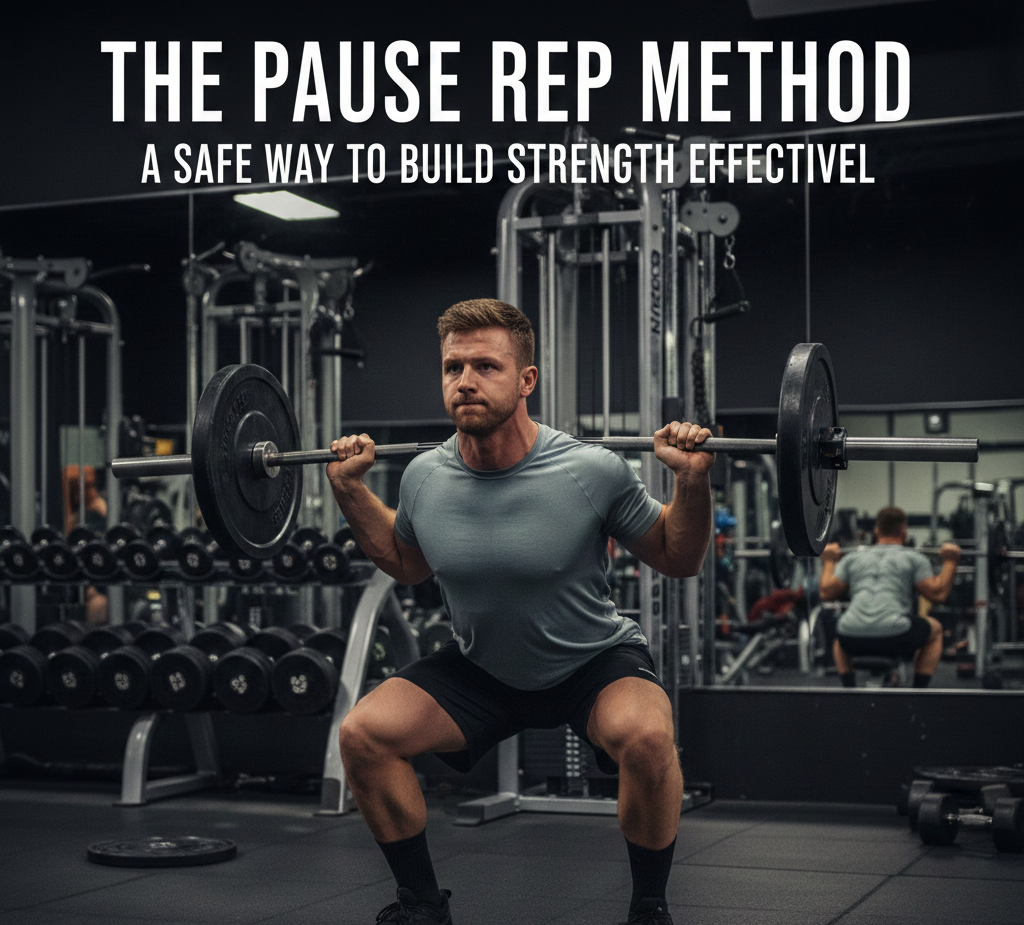
The Pause Rep Method: A Safe Way to Build Strength Effectively
The Pause Rep Method is a strength training technique where you pause for 1–3 seconds at a key point in each repetition. The goal is to fully engage the muscles, maintain proper form, and develop control throughout the movement.
Examples:
- Bench Press: Pause for 2 seconds when the bar is just above your chest, then push it up.
- Squat: Pause at the lowest point before standing back up.
- Deadlift: Pause at the bottom near the floor or knees before lifting the weight.
By eliminating momentum, pause reps allow for a controlled and safe lift that maximizes muscle engagement.
Why Pause Reps Are Effective
1. Improved Strength
Pause reps allow muscles to fully contract and stretch, activating more muscle fibers and motor units, which accelerates strength gains.
2. Better Muscle Control and Stability
During the pause, you must maintain balance and control, engaging stabilizer muscles that are crucial for heavy lifts.
3. Safer Lifting
Sudden jerks or reliance on momentum increase injury risk. Pause reps emphasize slow, controlled movements, reducing strain on joints and tendons.
4. Breaking Plateaus
If you’ve been lifting the same weights for a long time without progress, pause reps provide a new stimulus to muscles, helping you break through plateaus.
5. Enhanced Mind-Muscle Connection
Pausing allows you to focus on muscle contraction, improving mind-muscle connection and overall growth.
How to Perform Pause Reps Correctly
- Start with Lighter Weights
Begin with lighter weights to practice the pause and maintain proper form. - Focus on Compound Lifts
Pause reps are especially effective in exercises like bench press, squats, deadlifts, and overhead press. - Maintain a Controlled Tempo
Pay attention to breathing and core engagement. Avoid rushing the movement. - Short Pauses Are Sufficient
Typically, 1–3 seconds is enough. Longer pauses may cause unnecessary fatigue. - Progress Gradually
Gradually increase weight and repetitions as your muscles adapt to the pause technique.
Common Mistakes to Avoid When Performing Pause Reps
Even though the Pause Rep Method is highly effective, beginners and even experienced lifters often make mistakes that reduce its benefits or increase injury risk. Here are the most common errors and how to avoid them:
1. Jerking or Using Momentum
- Mistake: Pushing or pulling the weight with sudden jerks instead of controlled muscle engagement.
- Why It’s Harmful: Momentum reduces the effectiveness of the pause, decreases muscle activation, and increases the risk of injury, especially in joints and tendons.
- Solution: Focus on smooth, controlled movements. Pause fully at the target position without rocking or bouncing.
2. Holding Your Breath Too Long
- Mistake: Many lifters hold their breath during the pause.
- Why It’s Harmful: Holding breath for too long can increase blood pressure and reduce oxygen delivery to muscles, leading to dizziness or fatigue.
- Solution: Practice proper breathing: inhale before lowering, hold lightly during the pause, and exhale while lifting.
3. Skipping Warm-Up
- Mistake: Jumping straight into pause reps without warming up muscles and joints.
- Why It’s Harmful: Muscles, tendons, and ligaments are less prepared for stress, increasing injury risk.
- Solution: Perform a 5–10 minute warm-up with dynamic stretches or lighter sets before pause reps.
4. Pausing at the Wrong Point
- Mistake: Pausing too early or too late in the movement.
- Why It’s Harmful: Pausing at a point where muscles are not fully engaged reduces the benefits of the method.
- Solution: Identify the “weakest point” or the point of maximum muscle tension for each lift and pause there.
5. Using Excessive Weight Too Soon
- Mistake: Trying pause reps with very heavy weights immediately.
- Why It’s Harmful: It compromises form, increases injury risk, and limits muscle engagement.
- Solution: Start with lighter weights to master technique, then gradually increase load.
6. Overdoing Pause Reps
- Mistake: Performing pause reps on every exercise, every set.
- Why It’s Harmful: It can cause excessive fatigue, overtraining, and delayed recovery.
- Solution: Include pause reps in 1–2 key exercises per session, or alternate weekly.
Benefits of Pause Reps in Detail
The Pause Rep Method is not just a fancy lifting technique—it has multiple benefits that make your workouts safer, more effective, and results-driven. Here’s why incorporating pause reps can transform your strength training:
1. Increased Muscle Growth (Hypertrophy)
- How it works: Pause reps increase time under tension for your muscles, meaning your muscles stay contracted longer during each repetition.
- Benefit: This extra tension stimulates muscle fibers more effectively, leading to better hypertrophy (muscle size and density).
- Example: Pausing at the bottom of a bench press fully engages the chest muscles, giving a stronger growth stimulus than fast reps.
2. Improved Strength and Power
- How it works: By pausing at your lift’s weakest point, your muscles develop extra strength in that specific range of motion.
- Benefit: You can lift heavier weights over time because your strength curve improves and weak points are strengthened.
- Example: Pausing at the bottom of a squat strengthens your glutes and quads in the low position, making the full lift more powerful.
3. Enhanced Mind-Muscle Connection
- How it works: The pause forces you to focus on muscle contraction rather than rushing the movement.
- Benefit: This improves control, technique, and overall muscle activation, leading to more effective workouts.
- Example: During a row, pausing at the top ensures your back muscles do most of the work instead of momentum.
4. Better Joint Health and Injury Prevention
- How it works: Controlled pause reps reduce stress on joints and connective tissues by minimizing jerky or uncontrolled movements.
- Benefit: Less risk of common lifting injuries like shoulder strains, knee pain, or lower back issues.
- Example: Pausing at the bottom of a deadlift teaches proper form, protecting your spine and knees.
5. Breaks Workout Plateaus
- How it works: Your muscles adapt to standard lifting patterns over time, reducing gains. Pausing introduces a new stimulus.
- Benefit: Helps overcome plateaus by challenging muscles in a new way, reigniting strength and growth progress.
- Example: Lifters who hit a bench press plateau can add pause reps at the bottom to push through and lift heavier.
6. Better Control and Stability
- How it works: The pause forces stabilizing muscles to work harder, improving balance and overall lift control.
- Benefit: Enhanced stability helps with other lifts and functional movements outside the gym.
- Example: Holding a pause in a squat improves core stability and strengthens smaller supporting muscles.
7. Safer Training for Beginners and Advanced Lifters
- How it works: By slowing the movement and focusing on form, pause reps reduce the risk of poor technique.
- Benefit: Beginners learn proper movement patterns, while advanced lifters minimize injury risk while lifting heavier.
Sample Pause Rep Routine
Upper Body Workout:
- Bench Press: 3 sets × 8 reps (2-second pause at bottom)
- Overhead Press: 3 × 10 (pause at shoulder level)
- Bent Over Rows: 3 × 12 (pause at contraction)
Lower Body Workout:
- Squats: 3 × 8 (pause at lowest point)
- Deadlifts: 3 × 6 (pause at knees)
- Lunges: 3 × 10 (pause at bottom)
Tips:
- Include pause reps in 1–2 exercises per session.
- 2–3 sets per compound lift are sufficient.
- Rest 60–90 seconds between sets.
Integrating Pause Reps Into Your Weekly Routine
Option 1: Twice a Week
- Day 1: Upper Body Pause Reps
- Day 2: Lower Body Pause Reps
Option 2: One Exercise Per Session
- Include 1–2 pause sets for a major lift, keeping the rest of your sets normal.
Option 3: Deload Week
- Use lighter weights with pause reps to focus on form, control, and recovery
Tips for Performing Pause Reps Effectively
Incorporating pause reps into your strength training can significantly boost your results—but only if done correctly. Here are some practical tips to get the most out of this technique:
1. Start Light
- Tip: Begin with lighter weights than your normal lifting routine.
- Reason: This allows you to master the pause, maintain control, and focus on proper form before increasing load.
2. Focus on Key Exercises
- Tip: Use pause reps primarily on compound lifts like squats, bench press, deadlifts, and overhead presses.
- Reason: These exercises benefit the most from improved stability, strength, and mind-muscle connection.
3. Maintain a Controlled Tempo
- Tip: Lower the weight slowly, pause fully at the target point, and then lift in a controlled manner.
- Reason: Speed or jerky movements reduce muscle engagement and increase injury risk.
4. Pause at the Right Point
- Tip: Identify the weakest point of the movement or where maximum muscle engagement occurs.
- Reason: Pausing at this position strengthens muscles where they are normally weakest, improving your overall lift.
5. Don’t Overdo It
- Tip: Include pause reps in 1–2 exercises per session or 1–2 sessions per week.
- Reason: Too many pause reps can lead to fatigue and overtraining.
6. Practice Proper Breathing
- Tip: Inhale while lowering the weight, hold briefly during the pause, and exhale while lifting.
- Reason: Proper breathing keeps oxygen flowing to your muscles and prevents dizziness or fatigue.
7. Gradually Increase Weight
- Tip: Once comfortable with technique, slowly increase weight over weeks.
- Reason: Progressive overload combined with pause reps maximizes strength and hypertrophy safely.
8. Warm Up Properly
- Tip: Spend 5–10 minutes warming up with dynamic stretches or lighter sets.
- Reason: Prepares muscles, joints, and connective tissues for controlled movements, reducing injury risk.
9. Use Pause Reps to Break Plateaus
- Tip: Add pause reps when your lifts have stalled.
- Reason: The new stimulus challenges muscles in a different way, helping you overcome stagnation.
10. Focus on Mind-Muscle Connection
- Tip: During the pause, consciously engage and feel the targeted muscles.
- Reason: Enhances muscle activation, form, and long-term growth.
- .
Pause Rep Method: Quick Reference Chart
| Category | Key Points | Explanation / Risk | Solution / Tip |
| Common Mistakes | Jerking or using momentum | Reduces muscle engagement; increases injury risk | Perform slow, controlled movements; focus on form |
| Holding breath too long | Can increase blood pressure, cause dizziness | Practice proper breathing: inhale, pause lightly, exhale while lifting | |
| Skipping warm-up | Muscles/joints unprepared; higher injury risk | Warm up 5–10 minutes with dynamic stretches or lighter sets | |
| Pausing at wrong point | Muscle activation not optimized | Pause at weakest point or max tension in each lift | |
| Using excessive weight | Compromises form; higher injury risk | Start light, increase gradually | |
| Overdoing pause reps | Fatigue, overtraining, delayed recovery | Limit pause reps to 1–2 exercises per session or 1–2 sessions/week | |
| Benefits | Muscle growth (hypertrophy) | Increased time under tension promotes size & density | Pause 1–3 seconds at peak contraction for best results |
| Improved strength & power | Strengthens muscles at weakest point | Pause at weak points for better strength curve | |
| Enhanced mind-muscle connection | Focused contraction improves engagement | Concentrate on target muscles during pause | |
| Joint health & injury prevention | Controlled movements reduce stress on joints | Maintain proper form; avoid jerky movements | |
| Breaks plateaus | Provides new stimulus for stalled lifts | Include pause reps in lifts that have plateaued | |
| Better control & stability | Engages stabilizing muscles | Pause at bottom or mid-lift to improve balance | |
| Tips | Start light | Master form & pause technique | Gradually increase weight over time |
| Focus on compound lifts | Most effective for strength & growth | Bench press, squats, deadlifts, overhead press | |
| Maintain controlled tempo | Prevents injury & maximizes muscle activation | Slow lowering, pause, controlled lift | |
| Warm up properly | Prepares muscles & joints | 5–10 minutes dynamic warm-up or lighter sets | |
| Use proper breathing | Maintains oxygen supply & focus | Inhale lowering, hold lightly during pause, exhale lifting | |
| Don’t overdo | Prevents fatigue & overtraining | 1–2 exercises per session, or 1–2 sessions/week | |
| Mind-muscle connection | Maximizes engagement | Focus on feeling targeted muscles during pause | |
| Break plateaus strategically | Introduces new stimulus | Add pause reps when progress stalls |
Final Thoughts
The Pause Rep Method is a safe, effective, and versatile strength training technique. It enhances strength, stability, muscle growth, and injury prevention. By including pause reps in your workout, you can make your routine smarter, more controlled, and highly effective.
Remember: Slow, controlled movements with proper pauses are more effective than fast, uncontrolled lifting. This technique provides long-term results and sustainable strength, making it ideal for both beginners and advanced lifters.
Absolutely! Here’s a website/blog-friendly version of the Pause Rep Method Quiz with Questions and Answers you can include directly in your article. It’s SEO-friendly, reader-friendly, and keeps engagement high:
The Pause Rep Method: 30 Questions & Answers
Test your knowledge about the Pause Rep Method and understand how it helps build strength safely and effectively.
Questions & Answers
- What is the main purpose of the Pause Rep Method?
Answer: To increase muscle control and strength safely. - How long is a typical pause in a pause rep?
Answer: 1–3 seconds to maintain tension and control. - Pause reps are most effective for which type of exercises?
Answer: Compound exercises like squats, bench press, and deadlifts. - What is a common mistake when performing pause reps?
Answer: Jerking or using momentum during the pause. - Holding your breath during pause reps can cause:
Answer: Dizziness or increased blood pressure. - Which muscle benefit is directly enhanced by pause reps?
Answer: Muscle hypertrophy (growth). - Pause reps help break workout:
Answer: Plateaus in strength. - Pausing at the weakest point of a lift helps:
Answer: Strengthen muscles in that specific range of motion. - How often should pause reps be included in a weekly routine?
Answer: 1–2 exercises per session or 1–2 sessions per week. - Which of the following is a benefit of pause reps?
Answer: Enhanced mind-muscle connection. - Beginners should:
Answer: Start with lighter weights. - What is the recommended breathing technique during a pause rep?
Answer: Inhale while lowering, pause lightly, exhale while lifting. - Pause reps improve stability by:
Answer: Engaging stabilizer muscles. - Which of the following is NOT a common mistake with pause reps?
Answer: Maintaining proper form. - Pause reps can help prevent:
Answer: Injuries. - Which of these exercises is ideal for pause reps?
Answer: Bench press, squats, deadlifts, and overhead press. - Pause reps are useful for:
Answer: Both beginners and advanced lifters. - What does “time under tension” mean in pause reps?
Answer: The total time muscles are under contraction during a lift. - Why should warm-ups be done before pause reps?
Answer: To prepare muscles, joints, and connective tissues for controlled movement. - How does pause reps enhance mind-muscle connection?
Answer: By consciously engaging targeted muscles during the pause. - Overdoing pause reps can cause:
Answer: Fatigue and overtraining. - Pause reps improve the strength curve by:
Answer: Strengthening muscles at their weakest points. - For beginners, how many seconds should they pause?
Answer: 1–3 seconds. - Pause reps are beneficial for which type of muscles?
Answer: Stabilizer and prime mover muscles. - Why is proper tempo important in pause reps?
Answer: It prevents injury and maximizes muscle activation. - Which is a practical tip for pause reps?
Answer: Focus on key exercises rather than all exercises. - How can pause reps help with joint health?
Answer: By reducing uncontrolled stress on joints. - How can pause reps improve workout variety?
Answer: They provide a new stimulus to muscles. - Which of the following should NOT be done during pause reps?
Answer: Rushing through the pause. - What is the ultimate goal of pause reps?
Answer: Safer, more effective strength building with better control.

1 comment
[…] but it recruits multiple muscle groups, improves coordination, and challenges your core like few exercises […]