As we age, our bones naturally lose density, becoming thinner, weaker, and more prone to fractures. Osteoporosis, a condition that causes bones to become brittle, affects millions worldwide, especially women over 50. However, there is good news: controlled, moderate-impact exercise can help strengthen bones, improve mobility, and reduce the risk of fractures.
This article explains why bone health matters, which exercises work best, how to safely incorporate them into your routine, and how nutrition and lifestyle choices support bone strength.
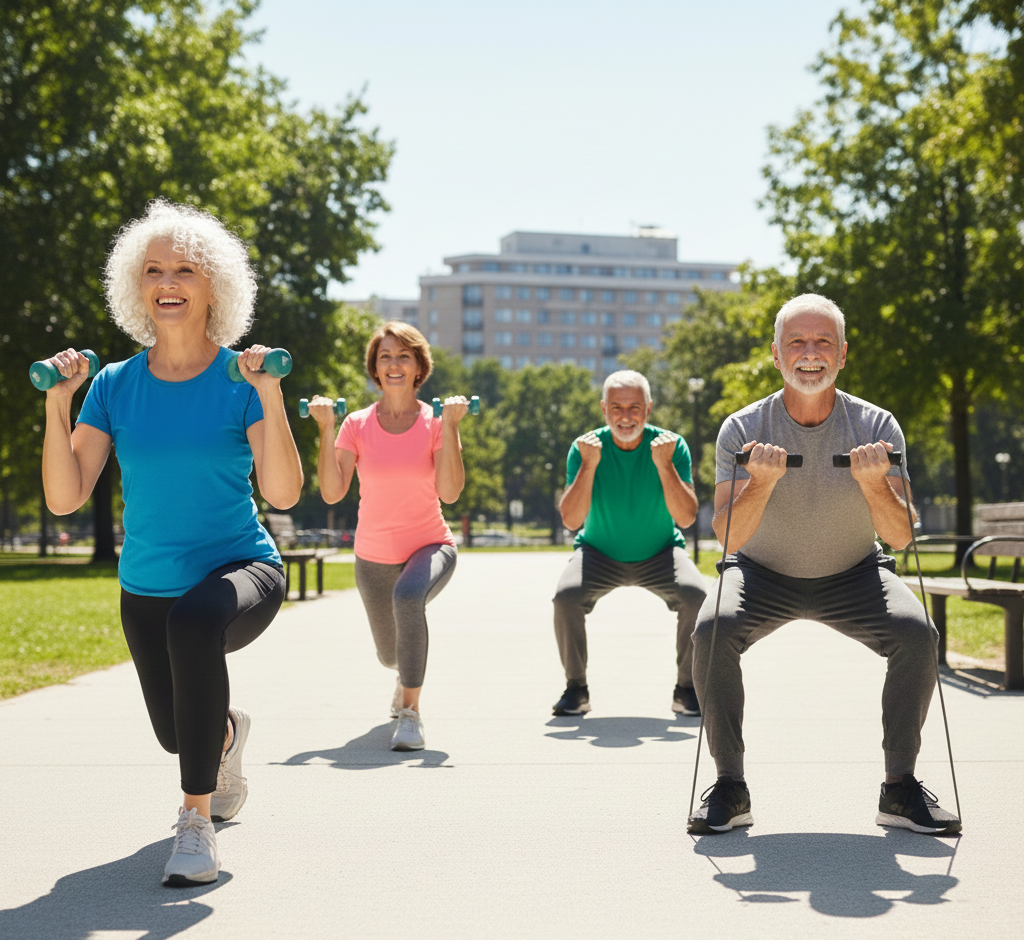
Strengthen Your Bones: The Best Exercises to Protect Against Osteoporosis
Why Bone Health Matters
Bone loss is a natural part of aging. Women, in particular, face accelerated bone density loss after menopause due to declining estrogen levels. Brittle bones can lead to fractures of the hip, wrist, or spine, which are not only painful but can limit independence.
Maintaining bone strength through exercise and nutrition is crucial for:
- Preventing fractures
- Supporting joint health
- Improving balance and mobility
- Maintaining independence and quality of life
Understanding Moderate-Impact Exercises
Moderate-impact exercises are movements that put controlled stress on bones, stimulating growth and density without causing injury. The UK’s Royal Osteoporosis Society recommends about 50 repetitions of moderate-impact exercises most days. Examples include:
- Low-level jumps
- Skips
- Light jogging
- Hops
Each jump or hop counts as one impact, gently signaling bones to maintain strength.
Expert Insight: Bone-Strengthening Tips from Trainers
Sarah Best, a certified personal trainer and founder of FindurFit UK, emphasizes ‘bone-bashing’ exercises as an essential component of fitness for older adults:
“Even small amounts of impact, done regularly, can strengthen bones. Five minutes of controlled jumps, three times a week, combined with strength training, makes a real difference.”
Her advice includes:
- Starting gradually
- Landing softly but with purpose
- Combining with a strength training routine
Top Bone-Strengthening Exercises
Here’s a list of effective exercises you can do at home or in the gym, suitable for people over 50:
1. Low-Level Jumps
- Stand with feet shoulder-width apart.
- Perform small vertical jumps, landing firmly on your feet.
- Repeat 10–15 times.
Benefits: Strengthens legs, hips, and spine while stimulating bone density.
- Skipping in Place
- Use a skipping rope or mimic the motion without one.
- Keep movements gentle and rhythmic.
- Duration: 30–60 seconds.
Benefits: Improves bone strength in the legs and feet and enhances cardiovascular health.
- Light Jogging
- Jog in place or in a safe area for 1–2 minutes.
- Focus on a moderate pace to avoid high-impact stress.
Benefits: Strengthens lower-body bones and supports circulation.
4. Mini Hops
- Hop forward, backward, or side-to-side in small, controlled movements.
- Perform 5–10 reps each direction.
Benefits: Builds bone strength and improves joint stability.
5. Step-Ups
- Use a sturdy step or low platform.
- Step up with one foot, then the other, and step back down.
- Repeat 10 times per leg.
Benefits: Strengthens hip, thigh, and ankle bones; improves balance.
6. Wall Push-Offs
- Stand facing a wall, place palms on it.
- Push off lightly, lifting heels slightly off the ground.
- Repeat 10–15 times.
Benefits: Strengthens upper-body bones, especially arms and shoulders.
Tips for Safe and Effective Workouts
- Start Slowly – Begin with gentle movements to allow bones and joints to adjust.
- Consistency Over Intensity – Short sessions done regularly are more effective than occasional long workouts.
- Focus on Landing – Landing with controlled pressure stimulates bone growth.
- Strength Training is Essential – Use weights or resistance bands to complement impact exercises.
- Stretch and Warm Up – Protect joints and improve flexibility.
- Maintain Good Posture – Engage your core and align your spine during exercises.
- Stay Hydrated – Adequate water supports muscle and joint health.
Diet and Lifestyle for Strong Bones
Exercise alone is not enough; nutrition plays a critical role. Focus on:
- Calcium-Rich Foods: Milk, yogurt, cheese, leafy greens
- Vitamin D: Sunlight exposure, fortified foods, supplements if needed
- Protein: Eggs, fish, lean meat, legumes to support muscle and bone health
- Healthy Fats: Nuts, seeds, olive oil for hormone regulation
- Limit Processed Foods and Sugar: Excess sugar can weaken bones
Lifestyle Tips:
- Avoid smoking and limit alcohol intake
- Maintain a healthy weight to reduce stress on bones
- Engage in balance exercises to prevent falls
Frequently Asked Questions (FAQs)
Q1: Can these exercises reduce osteoporosis risk?
A: Yes! Moderate-impact and strength exercises can help maintain bone density and reduce fracture risk.
Q2: How often should I do these exercises?
A: Ideally, 3–5 times a week for 5–10 minutes per session. Combine with strength training 2–3 times a week.
Q3: Are these safe for older adults?
A: Yes. Start slowly, use support if needed, and avoid high-impact moves until comfortable.
Q4: How long until I see results?
A: Muscle and bone strength can improve in 4–6 weeks, with visible improvements over a few months.
Q5: Can men benefit too?
A: Absolutely! Men also experience bone density loss with age, and these exercises help maintain strong bones.
Chart: Bone-Strengthening Exercises Overview
| Exercise Type | Repetitions / Duration | Target Area | Benefit |
| Low-Level Jumps | 10–15 reps | Legs, hips, spine | Stimulates bone density |
| Skipping | 30–60 sec | Legs, feet | Cardiovascular & bone health |
| Light Jogging | 1–2 min | Lower body | Bone stimulation & circulation |
| Mini Hops | 5–10 reps each way | Ankles, hips, legs | Bone & joint strength |
| Step-Ups | 10 reps per leg | Thighs, hips, ankles | Balance & bone density |
| Wall Push-Offs | 10–15 reps | Arms, shoulders | Upper-body bone strength |
Conclusion
Protecting bone health after 50 is vital for maintaining independence, mobility, and quality of life. By combining moderate-impact exercises, strength training, and a calcium- and vitamin D-rich diet, you can significantly improve bone density and reduce the risk of fractures.
Start small, stay consistent, and gradually increase intensity. Even 5–10 minute sessions, three times a week, can make a lasting difference. Remember, stronger bones lead to stronger, healthier, and more active years ahead.

2 comments
[…] lead to falls, fractures, and loss of independence, especially after the age of 50. Fortunately, balance training can help strengthen muscles, improve coordination, and enhance overall […]
[…] Mediterranean diet is more than just a “diet”—it is a lifestyle. For years, doctors and […]