Exercise protects the brain from stress and plays an important role in mental health. It helps strengthen the brain’s protective barrier, improves blood flow, and lowers stress hormones. In addition, exercise boosts mood by releasing feel-good chemicals.
As a result, regular physical activity may reduce the risk of stress-related mental health issues and support long-term brain health naturally.
How Exercise Protects the Brain From Stress Naturally
Exercise protects brain from stress naturally and plays a key role in mental 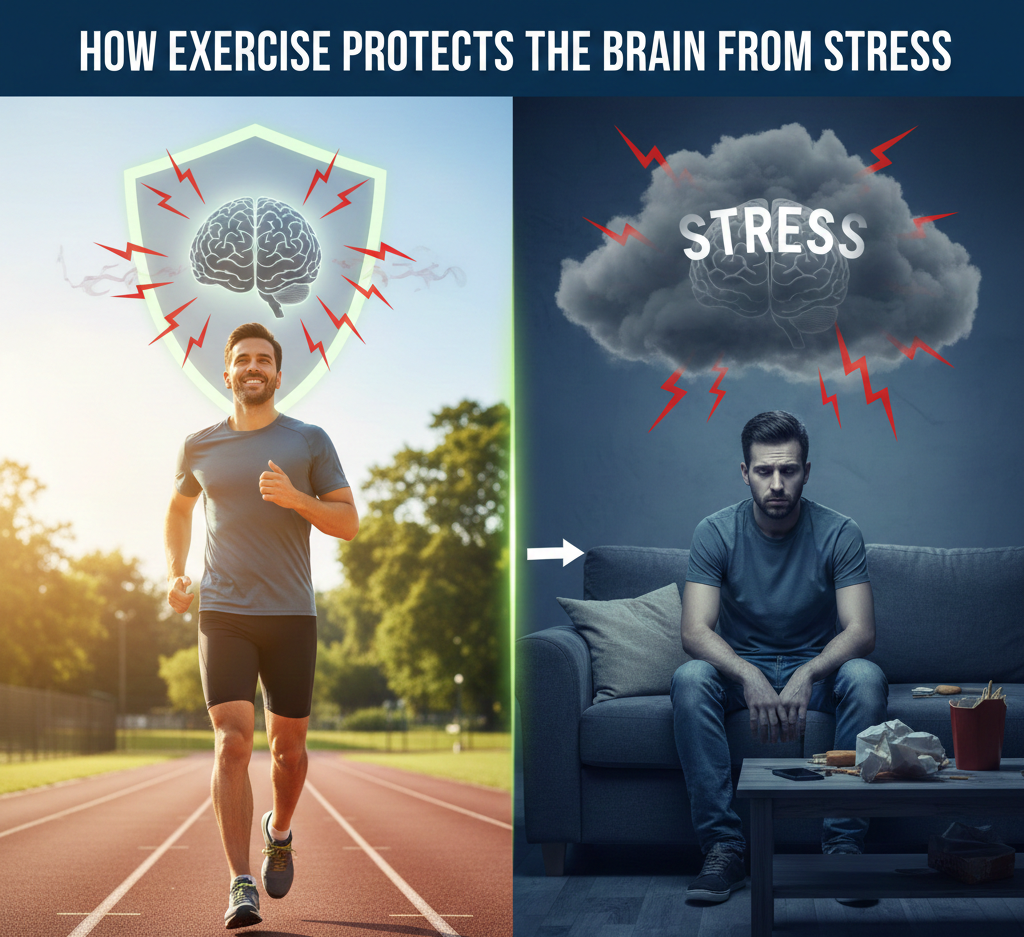 health. In fact, regular physical activity strengthens the brain. It also improves blood flow. Moreover, it reduces stress hormones. Exercise releases feel-good chemicals like endorphins. As a result, it can lower the risk of stress-related mental health problems. Simple activities like walking, jogging, or yoga make a big difference.
How it Strengthens the Brain
Firstly, exercise improves the brain’s protective barrier. This barrier keeps harmful substances away. In addition, it enhances oxygen and nutrient flow to brain cells. Consequently, brain cells stay healthy and strong. Exercise also encourages new brain cell growth. Moreover, this strengthens memory and focus over time.
How it Reduces Stress Hormones
Stress raises cortisol, which can harm the brain. However, exercise lowers cortisol naturally. At the same time, it increases mood-boosting chemicals like dopamine. Therefore, regular physical activity helps the brain stay calm. Short daily workouts can make a noticeable difference.
Mood Improvement Through Physical Activity
Exercise releases serotonin and dopamine, which lift mood. In addition, it can reduce anxiety and depression. For example, stretching, cycling, or swimming improves mental well-being. Furthermore, exercise gives a sense of achievement. As a result, people feel happier and more energetic.
How it Enhances Brain Function
Exercise also improves memory and focus. Moreover, it helps the brain learn faster and solve problems more efficiently. Physical activity increases energy and alertness. In addition, it can improve overall cognitive function. Even light daily exercise has long-term benefits.
Types of Exercise for Stress Relief
-
Walking or Jogging – Simple, effective, and easy.
-
Yoga – Combines movement and relaxation.
-
Strength Training – Improves mood and brain health.
-
Dancing – Fun and brain-friendly.
-
Cycling – Boosts circulation and lowers anxiety.
How Often Should You Exercise?
Consistency matters more than intensity. For example, 20–30 minutes daily is enough. In addition, short bursts throughout the day also help. Therefore, combining exercises ensures maximum brain benefits.
Staying Active and a Healthy Environment
Exercise works best in positive environments. For instance, nature walks reduce stress faster. Group activities or social exercises improve mood further. As a result, exercise in the right setting strengthens the brain naturally.
Long-Term Benefits
protects the brain from stress naturally. In addition, it reduces anxiety and depression. Furthermore, it boosts memory, focus, and energy. Consequently, it lowers the risk of cognitive decline. Even light daily activity adds up over months and years.
How Exercise Protects the Brain From Stress
Exercise protects the brain from stress and keeps your mind healthy. Stress is part of life, but it can harm the brain if not managed. exercise naturally shields your brain. It boosts blood flow and feel-good chemicals. Even a quick daily walk makes a huge difference in beating stress.”
How Exercise Strengthens the Brain
It improves the brain’s protective barrier. This barrier keeps harmful substances away from brain cells. Moreover, it boosts circulation, providing oxygen and nutrients .It encourages growth of new brain cells. As a result, memory, focus, and mental clarity improve. Regular movement makes the brain more resilient to stress.
How Reduces Stress Hormones
Stress increases cortisol, which can damage the brain. Exercise protects the brain from stress by lowering cortisol levels. It also increases dopamine and serotonin. These chemicals improve mood naturally. In addition, regular exercise helps the body manage stressful situations calmly. Short daily sessions are enough to balance stress hormones effectively.
Movement is the best medicine for a bad mood
Exercise helps the brain release feel-good chemicals. For example, serotonin and endorphins lift mood. In addition, movement reduces anxiety and depression. Even light activity, like stretching or cycling, improves mental health. Moreover, completing workouts gives a sense of achievement, boosting confidence. As a result, people feel happier, calmer, and more motivated in daily life.
How Protects Brain Function
Exercise improves memory, focus, and cognitive skills. Moreover, it enhances problem-solving abilities. It also increases alertness and energy. Physical activity strengthens brain cells and helps them communicate better. As a result, stressful situations become easier to handle. Even 20–30 minutes a day can make a noticeable difference in thinking clearly.
Types of Exercise That Protect the Brain
-
Walking or Jogging – Improves blood flow and reduces stress naturally.
-
Yoga – Combines breathing and movement to calm the mind.
-
Strength Training – Builds endurance and releases mood-boosting chemicals.
-
Cycling – Enhances circulation and energy levels.
-
Dancing – Fun activity that keeps the brain active.
How Often Should You Exercise?
Consistency is more important than intensity. It protects the brain from stress even with 20–30 minutes daily. Moderate workouts 3–5 times a week are ideal. Moreover, short active breaks during work help maintain mental clarity. As a result, a routine is easy to follow and provides long-term benefits.
Lifestyle Tips to Maximize Brain Protection
-
Sleep Well – Rest strengthens brain function.
-
Stay Hydrated – Supports cell function and energy.
-
Eat Healthy – Proper nutrients complement exercise.
-
Take Mindful Breaks – Short walks reduce stress spikes.
In addition, combining these habits with exercise protects the brain naturally.
Conclusion
Exercise protects the brain from stress by strengthening cells, improving blood flow, and lowering stress hormones. Moreover, it releases chemicals that boost mood and reduce anxiety. Regular exercise also enhances memory, focus, and cognitive flexibility. As a result, it is a simple, natural, and powerful way to maintain brain health. Even short daily activity can make a lasting difference. Start today, and protect your brain for a healthier, calmer life.
How Exercise Protects the Brain From Stress
Introduction
How protects the brain from stress and improves mental health naturally. Stress is common in daily life. However, it can harm memory, focus, and emotional balance. Fortunately, regular exercise strengthens the brain and helps it handle stress better. In addition, it supports mood, energy, and alertness. Even short daily activity can have lasting effects on brain health.
Supports Brain Blood Flow
Exercise increases blood flow to the brain. This delivers oxygen and nutrients to brain cells. In addition, it removes waste and toxins. As a result, brain cells function better. Regular movement improves clarity, focus, and overall brain health. Short bursts of walking or cycling during the day can already help.
Exercise Boosts Stress-Resistant Brain Cells
Exercise protects the brain from stress by strengthening neurons. Physical activity stimulates growth of new connections between cells. Moreover, it enhances communication in the brain. Consequently, the brain can handle stress without overreacting. Even light exercises like yoga or stretching support neuron strength.
Exercise Protects: Enhances Mental Resilience
Exercise improves resilience to emotional stress. For example, people who exercise regularly recover faster after stressful events. In addition, regular activity lowers anxiety and increases patience. As a result, the brain adapts better to challenges, making daily life easier to manage.
Exercise Improves Focus and Attention
Movement stimulates areas of the brain responsible for attention. In fact, exercise increases alertness and sharpness. Moreover, it helps with multitasking and memory retention. Students or professionals benefit from short exercise sessions during the day. As a result, concentration improves and mistakes decrease.
Exercise Regulates Hormones for a Calm Mind
Stress increases cortisol and other harmful hormones. Exercise protects the brain from stress by balancing these chemicals naturally. It also increases dopamine and serotonin, improving mood and motivation. In addition, it prevents long-term stress damage. People who exercise feel calmer and more energized.
Exercise Strengthens Brain-Body Connection
Physical activity improves the link between the brain and body. For example, balance exercises enhance coordination and spatial awareness. In addition, aerobic activity trains the brain to respond efficiently to signals from the body. As a result, movement becomes smoother and the brain adapts better to stress.
Types of Exercise for Brain Health
-
Brisk Walking – Simple and effective for circulation.
-
Swimming – Combines movement and relaxation.
-
Tai Chi – Improves balance and mental calmness.
-
Cycling – Boosts energy and mental alertness.
-
Bodyweight Exercises – Build strength and release stress naturally.
Moreover, combining different activities keeps the routine engaging and benefits the brain more.
Exercise Protects: Daily Brain Boost
Consistency matters most. Exercise protects the brain from stress even with 20–30 minutes daily. In addition, moderate exercise 4–5 times per week is ideal. Short breaks with movement during work also improve focus and reduce tension. As a result, the brain becomes more resilient to stress over time.
Lifestyle Habits to Support Brain Health
-
Adequate Sleep – Rest strengthens neurons and memory.
-
Healthy Nutrition – Supports energy and cognitive function.
-
Hydration – Brain cells work better with water.
-
Mindful Breaks – Simple breathing or walks reduce stress spikes.
In addition, pairing these habits with regular exercise maximizes stress protection.
Conclusion
Exercise protects the brain from stress in many ways. It improves blood flow, strengthens neurons, regulates hormones, and enhances focus. Moreover, it increases resilience to daily challenges and supports mental clarity. Even short, consistent movement improves brain health naturally. As a result, regular exercise is one of the easiest, safest, and most effective ways to protect the brain under stress. Start today for a calmer and sharper mind.
How Physical Activity Protects the Brain From Chronic Stress
Chronic stress raises cortisol, which can harm brain cells. Exercise protects the brain from stress by lowering cortisol levels naturally. It also increases dopamine, serotonin, and endorphins. These chemicals enhance mood and reduce anxiety. Moreover, exercise improves blood flow, delivering oxygen and nutrients to the brain. As a result, neurons stay healthy and handle stress more efficiently.
For example,
brisk walking or light jogging 20–30 minutes a day can reduce stress effects. In addition, activities like swimming or cycling improve heart health and promote calmness. Consequently, people experience better focus, memory, and emotional balance under pressure.
How Exercise Supports the Brain’s Stress Defense System
The brain has a natural stress defense system that regulates emotions and responses. Exercise protects the brain from stress by strengthening this system. It enhances communication between neurons in the hippocampus and prefrontal cortex. In addition, it increases proteins that protect neurons from damage.
For instance, yoga and mindful movement reduce stress spikes by calming the nervous system. Similarly, team sports or group activities improve coping mechanisms through social interaction.
Exercise Protects: Cognitive Flexibility
Cognitive flexibility is the brain’s ability to adapt to challenges. Exercise protects the brain from stress by improving this skill. It also enhances problem-solving and decision-making.
Exercise Protects: Emotional Resilience
Regular exercise builds emotional resilience. Exercise protects the brain from stress by helping the brain regulate mood. It also improves patience and reduces irritability. Moreover, people who move daily recover faster from stressful events. In addition, this reduces the risk of anxiety and depression over time. As a result, emotional control improves naturally.
Types of Exercise That Protect the Brain
-
Walking or Jogging – Increases circulation and lowers stress hormones.
-
Strength Training – Builds endurance and releases mood-boosting chemicals.
-
Yoga and Stretching – Combines movement with breathing to relax the mind.
-
Cycling – Improves blood flow and mental clarity.
-
Dancing – Fun and keeps the brain active.
Exercise Protects: Maximum Brain Benefits
Consistency is key. Exercise protects the brain from stress even with 20–30 minutes per day. In addition, moderate workouts 4–5 times a week work best. Short active breaks during work or study help maintain focus and reduce tension. As a result, regular exercise strengthens the brain over time and improves long-term mental health.
Exercise Protects: Stress-Resistant Lifestyle
-
Sleep Well – Rest restores brain cells and memory.
-
Eat Nutritious Food – Supports neuron function and hormone balance.
-
Hydrate Regularly – Water improves brain efficiency and energy.
-
Mindful Breaks – Short walks, breathing, or stretching reduce stress spikes.
In addition, combining these habits with regular exercise enhances the brain’s natural stress defense system.
Conclusion
Exercise protects the brain from stress by strengthening neurons, regulating hormones, improving mood, and enhancing focus. Moreover, it supports the brain’s stress defense system and builds resilience to daily challenges.
Even short, consistent movement improves mental clarity, emotional balance, and overall brain health. As a result, regular physical activity is a simple, natural, and effective way to maintain a strong, stress-resistant brain. Start today for a calmer, sharper, and healthier mind.
Exercise Protects Reduces Stress Impact
Chronic stress increases cortisol, which can damage neurons. Exercise protects the brain from stress by lowering cortisol naturally. It also boosts serotonin, dopamine, and endorphins, which improve mood. Moreover, increased blood flow delivers oxygen and nutrients to brain cells. As a result, the brain functions more efficiently and stress has less impact.
For example, 20–30 minutes of walking, cycling, or swimming each day reduces stress levels. In addition, even light activities like stretching or gentle yoga help calm the nervous system. Consequently, daily movement keeps the brain resilient against mental strain.
How Exercise Helps the Brain Cope With Mental Stress
The brain has a stress response system that reacts to challenges. Exercise protects the brain from stress by strengthening this system. It improves communication between the prefrontal cortex and hippocampus, which control focus, memory, and decision-making. In addition, exercise increases proteins that protect neurons from stress-related damage. As a result, the brain can manage mental challenges more effectively.
For instance, yoga, tai chi, or mindful walking helps the brain recover after stressful events. Similarly, group activities or team sports provide social support while reducing mental tension. Moreover, combining movement with deep breathing improves resilience to emotional stress.
Exercise Enhances Cognitive Flexibility
Cognitive flexibility allows the brain to adapt under pressure. Exercise protects the brain from stress by improving this ability. It also boosts problem-solving and decision-making skills. In addition, movement improves attention and memory. As a result, stressful situations become easier to handle. Short daily sessions, even light strength training or brisk walks, support mental flexibility.
Building Emotional Resilience Through Exercise
Daily activity strengthens emotional resilience. Exercise protects the brain from stress by helping regulate mood and emotions. It also reduces anxiety and irritability. Moreover, regular exercise allows faster recovery from negative experiences. In addition, consistent activity lowers the risk of depression over time. As a result, emotional control improves naturally, making the brain better at handling challenges.
Exercise Protects Best Stress-Relief tips
-
Walking or Jogging – Improves circulation and lowers cortisol.
-
Yoga and Stretching – Combines movement with controlled breathing to relax the mind.
-
Strength Training – Builds endurance and releases mood-enhancing chemicals.
-
Cycling – Boosts blood flow, energy, and mental clarity.
-
Dancing – Fun and stimulating for the brain.
Moreover, mixing different exercises maximizes brain benefits and prevents boredom.
Exercise Protects: Frequency and Duration
Consistency matters more than intensity. Exercise protects the brain from stress even with 20–30 minutes per day. In addition, moderate activity 4–5 times a week works best. Short breaks with movement during work or study also help maintain focus and reduce tension. As a result, the brain strengthens naturally and stress resilience improves over time.
Supporting Brain Health With Lifestyle Habits
-
Sleep Well – Rest helps repair neurons and supports memory.
-
Eat Nutritious Foods – Nutrients support neuron function and hormone balance.
-
Stay Hydrated – Water helps brain cells function efficiently.
-
Take Mindful Breaks – Short walks, breathing exercises, or stretching reduce daily stress spikes.
In addition, pairing these habits with daily exercise enhances the brain’s natural stress defense system.
Conclusion
Exercise protects the brain from stress by lowering cortisol, improving mood, and strengthening neurons. Moreover, it enhances cognitive flexibility, emotional resilience, and the brain’s stress defense system. Even short, consistent daily activity improves focus, memory, and mental clarity. As a result, regular physical activity is one of the most effective ways to cope with mental stress and maintain long-term brain health. Start today to protect your brain and support emotional balance naturally.
Understanding Brain Resilience
Brain resilience is the ability to adapt and recover from stress. Exercise protects the brain from stress by improving this capacity. When the brain is resilient, it handles challenges efficiently. Neurons communicate better, stress responses are balanced, and cognitive flexibility improves. Moreover, resilient brains are less likely to develop anxiety or depression. Regular physical activity trains the brain to respond calmly to daily pressures.
Exercise and Hormonal Balance
Stress triggers cortisol, which can harm neurons over time. Exercise protects the brain from stress by reducing cortisol levels naturally. It also boosts dopamine, serotonin, and endorphins. These chemicals improve mood and promote calmness. In addition, exercise helps regulate adrenaline, preventing the body from staying in constant “fight or flight” mode. As a result, the brain and body remain balanced even during challenging situations.
Example: A 20–30 minute brisk walk can lower cortisol and elevate mood for hours. Similarly, cycling or swimming reduces tension and enhances emotional stability.
How Exercise Strengthens Neural Connections
Exercise enhances communication between neurons. Exercise protects the brain from stress by improving synaptic strength. In addition, it increases neurotrophic factors that help new neurons grow. As a result, memory, focus, and learning improve. Stronger neural networks allow the brain to process stress more efficiently. Moreover, regular exercise prevents cognitive decline as we age.
Tip: Activities like yoga, dance, or even weight training stimulate different parts of the brain while strengthening connections.
Exercise Protects Improves Brain Blood Flow
Good circulation is essential for brain health. Exercise protects the brain from stress by increasing blood flow. This brings oxygen and nutrients to neurons and removes waste. In addition, proper blood flow helps the brain recover from stress faster. Consequently, decision-making and focus improve, even during high-pressure situations.
Examples of aerobic exercises: Walking, running, swimming, and cycling are excellent for maintaining healthy circulation.
Exercise Protects: Enhancing Cognitive Flexibility
Cognitive flexibility is the ability to adapt to new information or change plans. Exercise protects the brain from stress by improving this skill. It also strengthens problem-solving and decision-making. Moreover, physical activity increases attention span and working memory. As a result, stressful situations are handled more calmly, reducing the mental impact of challenges.
Emotional Resilience and Stress Recovery
Daily exercise improves emotional resilience. Exercise protects the brain from stress by helping regulate mood and emotions. It also reduces anxiety and irritability. People who move consistently recover faster from stressful events. Additionally, regular activity decreases the risk of depression. In short, exercise equips the brain to handle emotional challenges with greater ease.
Exercise Protects: Sleep and Stress Recovery
Sleep is essential for brain resilience. Exercise protects the brain from stress by improving sleep quality. Physical activity helps regulate circadian rhythms, making it easier to fall asleep and stay asleep. Moreover, deeper sleep supports memory consolidation and neuron repair. As a result, the brain is better prepared to handle stress the next day.
Best Types of Exercise for Brain Stress Resilience
-
Walking or Jogging – Easy, effective, and improves circulation.
-
Strength Training – Builds physical and mental endurance.
-
Yoga and Stretching – Combines movement with mindfulness and breathing.
-
Cycling – Enhances blood flow and energy.
-
Dancing – Fun, social, and stimulates multiple brain regions.
-
Swimming – Full-body workout that relaxes the mind.
Frequency and Duration for Maximum Stress Protection
Consistency is more important than intensity. Exercise protects the brain from stress even with 20–30 minutes daily. Moderate workouts 4–5 times a week are ideal. Short active breaks during work or study also help maintain focus and reduce tension. As a result, the brain strengthens naturally, improving long-term resilience and mental health.
Lifestyle Habits to Support Brain Resilience
-
Sleep Well – Rest supports neuron repair and emotional stability.
-
Eat Brain-Healthy Foods – Omega-3s, antioxidants, and protein nourish the brain.
-
Stay Hydrated – Water supports cell function and energy.
-
Practice Mindful Breaks – Breathing, stretching, or walking reduce stress spikes.
In addition, combining these habits with exercise maximizes brain stress resilience.
Conclusion
Exercise protects the brain from stress by lowering harmful hormones, strengthening neurons, and improving mood. Moreover, it enhances cognitive flexibility, emotional resilience, and sleep quality. Daily movement increases blood flow, supports neural growth, and equips the brain to recover from stress faster. Even short, consistent sessions can make a profound difference. As a result, regular exercise is one of the simplest, most effective ways to maintain a calm, resilient, and healthy brain. Start today to boost brain resilience naturally.
Exercise Reduces Stress Hormones
Stress increases cortisol, which can damage brain cells over time. Exercise protects the brain from stress by lowering cortisol naturally. Regular movement balances stress hormones. It also triggers the release of dopamine, serotonin, and endorphins. These chemicals improve mood and mental clarity.
Short Sessions Are Effective
Even 15–20 minutes of walking or jogging reduces cortisol levels. Exercise protects the brain from stress by calming the nervous system. Short daily sessions can have lasting effects on mental health.
Protecting Neurons from Damage
Chronic stress can shrink neurons in the hippocampus, affecting memory. Exercise protects the brain from stress by strengthening neurons and preventing shrinkage. It also improves connections between brain cells. Stronger neurons help the brain process stress without damage.
Why Exercise Protects Brain Health
Aerobic exercise, like cycling or swimming, increases growth factors that protect neurons. Exercise protects the brain from stress by promoting neuron health and resilience.
Exercise Protects Brain Blood Circulation
Proper circulation is essential for brain health. Exercise protects the brain from stress by improving blood flow to neurons. Oxygen and nutrients reach brain cells efficiently. It also removes toxins and waste. This supports memory, focus, and cognitive function.
Exercise Protects the Brain from Inflammation
Stress increases inflammation, which harms neurons and cognition. Exercise protects the brain from stress by lowering inflammatory markers. It also improves immune function. Reduced inflammation supports mental clarity and emotional balance.
Exercise Protects the Brain: Add Mindfulness
Yoga, tai chi, or stretching exercises calm the mind and reduce inflammation. Exercise protects the brain from stress and supports overall brain health.
Enhancing Cognitive Function
Stress can impair attention, learning, and decision-making. Exercise protects the brain from stress by boosting cognition. It also strengthens the prefrontal cortex and hippocampus. This improves focus, memory, and problem-solving.
Exercise Supports Daily Tasks
Short, consistent exercise helps with work or study performance. Exercise protects the brain from stress by keeping the mind sharp under pressure.
Emotional Resilience Through Movement
Daily exercise builds emotional strength. Exercise protects the brain from stress by regulating mood and reducing anxiety. It also helps recover faster from stressful events. Emotional resilience improves naturally with regular activity.
Activities That Help
Walking, cycling, swimming, yoga, or dancing strengthen emotional resilience. Exercise protects the brain from stress while making mood regulation easier.
Frequency and Duration for Brain Protection
Consistency is key. Exercise protects the brain from stress even with 20–30 minutes per day. Moderate workouts 4–5 times a week are most effective. Short active breaks during work or study also help maintain focus. As a result, the brain recovers faster from stress and remains healthy.
Conclusion
Exercise protects the brain from stress by lowering cortisol, reducing inflammation, and strengthening neurons. It improves blood flow, boosts cognitive function, and enhances emotional resilience. Even short daily exercise sessions help the brain cope with stress naturally. As a result, regular movement is one of the simplest and most effective ways to prevent stress damage and maintain a healthy, sharp, and resilient brain. Start today to protect your brain and improve long-term mental health.

1 comment
[…] BENTO JERRY January 24, 2026 by BENTO JERRY January 24, 2026 0 comments 1 Daily Habit Shortening Your Life – Even If You […]