Creating a home gym that’s both smart and effective doesn’t require a huge space or expensive machines. With the right equipment, you can build strength, improve flexibility, and enjoy a complete workout without leaving your home.
A well-equipped home gym allows you to:
- Maximize results in strength, cardio, and mobility.
- Stay consistent with your workouts.
- Save time and money compared to regular gym memberships.
- Customize your fitness routine to your own goals and schedule.
This guide provides a step-by-step approach to choosing the best home workout equipment, along with exercises, tips, common mistakes, and charts for easier understanding.
Why Investing in Home Gym Equipment is Worth It
Investing in home workout equipment is not just about convenience; it impacts your long-term health and fitness. Here’s why:
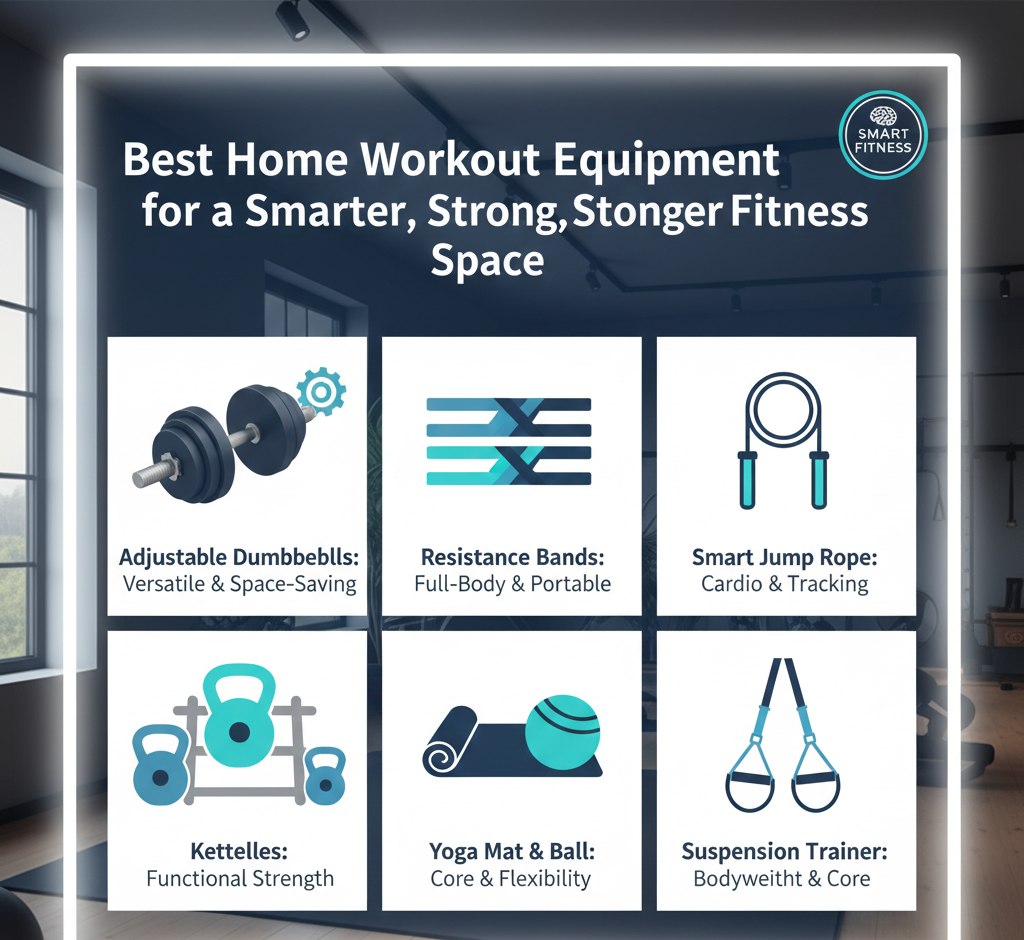
Best Home Workout Equipment for a Smarter, Stronger Fitness Space
- Convenience: Work out anytime without commuting.
- Consistency: Easy access encourages regular exercise.
- Privacy: Exercise in a comfortable, personal space.
- Cost-Effective: Avoid expensive gym memberships over time.
- Versatility: Many home gym tools allow a variety of workouts, including strength training, cardio, and flexibility exercises.
Chart: Benefits of Home Workout Equipment
| Benefit | Why It Matters |
| Convenience | Exercise anytime without leaving home |
| Consistency | Regular workouts improve results |
| Privacy | Comfortable and personal environment |
| Cost-Effective | Saves money on gym memberships |
| Versatility | Supports strength, cardio, and flexibility |
Top Home Workout Equipment
Here’s a list of essential home gym tools with detailed explanations, exercises, and tips.
1. Dumbbells
Why You Need Them:
Dumbbells are the most versatile strength training tool. They allow you to perform exercises for all major muscle groups and are excellent for building muscle, strength, and endurance. Adjustable dumbbells save space and allow weight progression as you get stronger.
Step-by-Step Exercises:
- Bicep Curls:
- Stand with feet shoulder-width apart, hold a dumbbell in each hand.
- Keep elbows close to your torso and curl the weights up toward your shoulders.
- Lower slowly.
- Reps/Sets: 10–15 reps, 2–3 sets.
- Goblet Squats:
- Hold a dumbbell vertically against your chest.
- Squat down until thighs are parallel to the floor.
- Push through your heels to stand up.
- Reps/Sets: 12–15 reps, 2–3 sets.
- Shoulder Press:
- Hold dumbbells at shoulder height with palms facing forward.
- Press overhead until arms are fully extended.
- Lower slowly.
- Reps/Sets: 10–12 reps, 2–3 sets.
Tips:
- Start with moderate weights and increase gradually.
- Maintain proper posture—keep back straight and core engaged.
Common Mistakes:
- Swinging the weights instead of controlled movements.
- Arching your back during shoulder presses.
- Resistance Bands
Why You Need Them:
Resistance bands are lightweight, portable, and versatile, making them perfect for strength and mobility training. They provide variable resistance and can be used for full-body workouts.
Step-by-Step Exercises:
- Band Squats:
- Place the band around your thighs, just above the knees.
- Squat down while keeping knees aligned with toes.
- Stand up slowly.
- Reps/Sets: 12–15 reps, 2–3 sets.
- Glute Bridges:
- Lie on your back with knees bent, feet flat.
- Place the band above your knees.
- Lift hips toward the ceiling, squeeze glutes, and lower slowly.
- Reps/Sets: 12–15 reps, 2–3 sets.
- Arm Presses:
- Anchor band behind you, hold handles, press forward.
- Slowly return to the starting position.
- Reps/Sets: 10–12 reps, 2–3 sets.
Tips:
- Use bands with varying resistance levels.
- Focus on slow, controlled movements.
Common Mistakes:
- Letting knees collapse inward during squats.
- Using too much resistance too early.
3. Kettlebells
Why You Need Them:
Kettlebells allow dynamic, full-body movements that improve strength, endurance, and balance. They are compact and space-saving.
Step-by-Step Exercises:
- Kettlebell Swings:
- Stand with feet hip-width apart, hold kettlebell with both hands.
- Swing it between your legs, then forward to shoulder height using hip drive.
- Reps/Sets: 12–15 reps, 2–3 sets.
- Deadlifts:
- Place the kettlebell on the floor.
- Hinge at hips, keep back straight, lift kettlebell to standing position.
- Lower slowly.
- Reps/Sets: 10–12 reps, 2–3 sets.
- Turkish Get-Ups:
- Lie on your back holding a kettlebell overhead.
- Slowly rise to standing while keeping the kettlebell raised.
- Reverse to lie down.
- Reps/Sets: 3–5 reps per side.
Tips:
- Learn proper form to prevent injury.
- Start with lighter kettlebells and progress gradually.
Common Mistakes:
- Using arms instead of hips in swings.
- Rounding the back during deadlifts.
4. Adjustable Weight Bench
Why You Need It:
An adjustable bench supports strength exercises, allowing incline, decline, and flat positions for variety.
Step-by-Step Exercises:
- Chest Press:
- Lie on the bench, hold dumbbells, press upward.
- Lower slowly.
- Dumbbell Rows:
- Place one knee on the bench, the other foot on the floor.
- Pull the dumbbell to your chest, then lower.
- Step-Ups:
- Step onto the bench with one foot, push through the heel, step down.
Tips:
- Choose a foldable, sturdy bench for small spaces.
- Keep the core engaged during exercises.
Common Mistakes:
- Arching back excessively during presses.
- Losing balance on step-ups.
5. Pull-Up Bar
Why You Need It:
Pull-ups strengthen upper body and core muscles and improve grip strength.
Step-by-Step Exercises:
- Pull-Ups:
- Grab the bar with palms facing away, pull up until the chin is above the bar.
- Chin-Ups:
- Palms facing toward you, pull up similarly.
- Hanging Leg Raises:
- Hang from the bar, lift legs straight or bent toward the chest.
Tips:
- Use assistance bands if needed.
- Focus on controlled motion.
Common Mistakes:
- Swinging body for momentum.
- Partial range of motion.
6. Yoga Mat
Why You Need It:
A mat provides cushioning for floor exercises, stretches, and core workouts.
Uses:
- Pilates, yoga, and stretching.
- Floor push-ups, planks, and bridges.
Tips:
- Choose a thick, non-slip mat.
- Keep it clean and dry for safety.
7. Stability Ball
Why You Need It:
Stability balls engage the core, improve balance, and enhance flexibility.
Exercises:
- Squats with ball against wall
- Crunches on the ball
- Glute bridges
Tips:
- Inflate properly for stability.
- Start with basic movements, then progress.
8. Jump Rope
Why You Need It:
Jump ropes provide cardio, coordination, and endurance in a small space.
Exercises:
- Warm-up
- Interval training
- Full-body cardio circuits
Tips:
- Begin slowly, increase speed gradually.
- Land softly to protect joints.
Tips for a Smarter Home Gym
1. Use Multi-Purpose Equipment for Versatility
When setting up a home gym, choose equipment that can be used for multiple exercises.
- Why it matters: Multi-purpose tools save space and money. Instead of buying a separate machine for every muscle group, you can perform a variety of exercises with just a few items.
- Examples:
- Dumbbells: Can be used for curls, presses, squats, rows, and lunges.
- Resistance Bands: Perfect for upper body, lower body, and core workouts.
- Kettlebells: Ideal for swings, presses, deadlifts, and functional movements.
- Tip: Start with a set of adjustable dumbbells and a few bands of different resistance levels to cover most workouts.
2. Optimize Space with Foldable or Stackable Tools
Space is often limited in home gyms, so it’s important to make the most of the area you have.
- Why it matters: A cluttered workout space can feel discouraging and even unsafe.
- How to optimize:
- Use foldable benches that can be stored upright against a wall.
- Stackable weights and kettlebells save floor space.
- Hang resistance bands or jump ropes on wall hooks.
- Keep a designated workout corner free from furniture or obstacles.
- Tip: Even a corner of a living room can serve as an efficient home gym if equipment is properly organized.
3. Focus on Safety and Stability
Safety should always come first in a home gym. Prevent injuries by ensuring your space and equipment are secure.
- Why it matters: Poorly placed equipment or slippery floors can lead to accidents.
- Safety tips:
- Place mats under heavy equipment to prevent slipping.
- Ensure benches and racks are sturdy and on level surfaces.
- Keep floors free from cables, weights, or clutter.
- Wear supportive footwear during workouts.
- Tip: Start with light weights and basic exercises to get comfortable with form before advancing.
4. Set a Routine for Consistency
Creating a consistent workout schedule is key to long-term success.
- Why it matters: Regularity builds habit and improves results.
- How to set a routine:
- Dedicate specific days and times for workouts.
- Mix strength, cardio, and flexibility exercises in each week.
- Track progress using a journal or fitness app.
- Tip: Even 20–30 minutes per day, 3–5 times a week, is highly effective when done consistently.
5. Start Small and Invest Gradually
You don’t need to buy all the equipment at once. Start with basics and expand over time.
- Why it matters: Overbuying can waste space and money.
- How to start small:
- Begin with dumbbells, resistance bands, and a mat.
- Add kettlebells, bench, or cardio tools gradually.
- Upgrade or replace equipment as your fitness level grows.
- Tip: Prioritize equipment that will give the most versatile workouts first.
6. Include Strength and Cardio Exercises
A balanced home gym should support both strength training and cardiovascular fitness.
- Why it matters: Strength training builds muscle and supports bone health, while cardio improves heart health and endurance.
- How to combine:
- Alternate strength exercises (dumbbells, resistance bands) with short cardio bursts (jump rope, high knees).
- Include functional movements like kettlebell swings or burpees.
- Tip: Even 10–15 minutes of cardio in between strength sets can boost calorie burn and stamina.
7. Keep Equipment Organized
A well-organized gym encourages regular use and improves safety.
- Why it matters: Disorganized equipment can make workouts less efficient and increase the risk of accidents.
- How to organize:
- Use racks or shelves for dumbbells and kettlebells.
- Hang resistance bands and jump ropes on wall hooks.
- Fold mats and benches when not in use.
- Tip: Create a designated spot for each item, so everything is easy to find and put away.
: Tips for a Smarter Home Gym
| Tip | Detailed Explanation |
| Multi-Purpose Equipment | Save space and money by using tools for multiple exercises. |
| Optimize Space | Use foldable/stackable items and designate a clear workout area. |
| Focus on Safety | Secure equipment, wear proper footwear, keep floors clutter-free. |
| Set a Routine | Create a consistent workout schedule for habit and results. |
| Start Small, Invest Gradually | Begin with essentials, expand as fitness level grows. |
| Include Strength & Cardio | Combine muscle building with cardiovascular exercises. |
| Keep Equipment Organized | Store items properly for efficiency and safety. |
Benefits of a Home Gym
1. Saves Time and Money
- Time-saving: You don’t need to commute to a gym, wait for machines, or adjust to crowded schedules. This allows you to fit workouts seamlessly into your day.
- Cost-effective: While there is an initial investment in equipment, over time, you save money compared to monthly gym memberships, travel costs, and class fees.
Example: Spending $300–500 on a few essential pieces of equipment can replace months or even years of expensive gym memberships.
2. Personalized Workout Options
- Tailored routines: You can design workouts specific to your goals, whether it’s building strength, improving cardio, or increasing flexibility.
- Flexible intensity: Adjust weights, resistance, or exercise duration according to your fitness level.
- Adaptable schedules: Workouts can be modified daily depending on energy, health, or personal commitments.
Example: Beginners can start with resistance bands, while advanced users can incorporate heavier dumbbells and kettlebells without waiting for equipment.
3. Increases Consistency
- Regular access: Having equipment at home makes it easier to stick to a routine, increasing long-term adherence.
- Motivation: Immediate availability encourages spontaneous workouts and avoids skipping sessions due to travel or time constraints.
Example: A short 20–30 minute session at home is more achievable than a 1-hour gym session after commuting.
4. Privacy and Comfort
- Workout in a safe environment: You can exercise without feeling self-conscious or waiting for others to finish equipment.
- Comfortable surroundings: Play your favorite music, control temperature, and maintain personal hygiene without worrying about public spaces.
Example: Yoga, stretching, or pilates can be done without distractions or judgment, enhancing focus and relaxation.
5. Versatility for Strength, Cardio, and Flexibility
- Strength training: Dumbbells, kettlebells, resistance bands, and benches allow you to target all major muscle groups.
- Cardio workouts: Jump ropes, treadmill alternatives, or high-intensity interval routines keep heart health in check.
- Flexibility and balance: Yoga mats, stability balls, and resistance bands support stretching, mobility, and balance exercises.
Example: In one session, you can combine squats with dumbbells, kettlebell swings for endurance, and yoga stretches for flexibility, all in the comfort of your home.
Chart: Key Benefits of a Home Gym
| Benefit | Detailed Explanation |
| Saves Time & Money | Eliminates commuting, long waits, and monthly gym fees. |
| Personalized Workout Options | Tailor exercises, intensity, and schedule to your needs. |
| Increases Consistency | Immediate access encourages regular workouts. |
| Privacy & Comfort | Exercise in a distraction-free, judgment-free environment. |
| Versatility for Strength, Cardio, Flexibility | Supports full-body fitness routines in one space. |
(FAQs) About Home Gyms
1. Do I need a lot of space to set up a home gym?
No. Even a small corner of a room can serve as a functional home gym. Compact, foldable, or stackable equipment makes it easy to work out efficiently without taking up much space.
2. What equipment is essential for beginners?
Start with a few versatile items:
- Dumbbells or adjustable dumbbells
- Resistance bands
- Yoga mat
- Jump rope
These cover strength, flexibility, and cardio exercises.
3. Can I build muscle at home without machines?
Yes. Free weights, resistance bands, kettlebells, and bodyweight exercises can effectively build strength and muscle. Machines are optional, not necessary.
4. How often should I exercise at home?
Aim for 3–5 days per week, combining strength, cardio, and flexibility. Short daily sessions (20–40 minutes) are effective if performed consistently.
5. How do I prevent injuries at home?
- Use proper form for every exercise.
- Start with light weights or resistance.
- Ensure floors are stable and free from clutter.
- Warm up before and cool down after workouts.
6. How can I stay motivated to work out at home?
- Set a routine with specific days and times.
- Track your progress with a journal or fitness app.
- Vary your workouts to avoid boredom.
- Play music or join online fitness classes for engagement.
7. Can a home gym replace a commercial gym?
Yes, for most people. With the right equipment and a structured routine, a home gym can provide strength, cardio, flexibility, and endurance training.
8. How much should I invest in home gym equipment?
Start small and invest gradually. Begin with essentials like dumbbells, resistance bands, and a mat. Add kettlebells, benches, or cardio equipment as needed.
9. How do I organize my home gym efficiently?
- Use racks or shelves for weights.
- Hang resistance bands and jump ropes on hooks.
- Fold mats and benches when not in use.
- Keep a designated space for every item.
10. Can I do both cardio and strength training at home?
Yes. Combine strength exercises (dumbbells, resistance bands) with short cardio bursts (jump rope, high knees, bodyweight circuits) for a balanced workout.
11. Are home gyms suitable for beginners?
Absolutely. Start with light equipment and basic exercises, then gradually increase intensity as fitness improves.
12. How do I measure progress at home?
- Track repetitions, sets, and weights lifted.
- Take progress photos.
- Monitor endurance and flexibility improvements.
- Use a fitness app to log workouts.
13. Is it safe to work out alone at home?
Yes, if you follow safety precautions: proper form, controlled movements, and secure equipment. Avoid lifting heavy weights alone if you’re unsure about technique.
14. How do I combine strength and flexibility training at home?
- Alternate strength exercises with stretching routines.
- Use yoga mats, stability balls, and resistance bands to improve mobility.
- Include warm-ups and cool-downs in every session.
15. Can children or family members use the home gym too?
Yes, with supervision and age-appropriate exercises. Ensure that equipment is safely stored and that children are guided on proper usage.
Conclusion
Creating a smarter and stronger home fitness space is not only achievable but also highly rewarding for your health and convenience. With basic but versatile equipment such as dumbbells, resistance bands, kettlebells, a bench, and simple cardio tools, you can target all major muscle groups, improve endurance, and maintain flexibility without leaving your home. The key is to start small, focusing first on essential items that allow a variety of exercises. As you gain strength, confidence, and experience, you can gradually add more equipment or increase intensity to challenge yourself further. Consistency is crucial—regular workouts, even short sessions, contribute to long-term results. Additionally, a well-organized, safe, and personalized workout space makes exercising more enjoyable and sustainable. By combining strength, cardio, and flexibility training in your home gym, you can achieve a full-body, balanced, and effective fitness routine that supports your long-term health goals and enhances overall well-being.

1 comment
[…] buildup can block blood flow and increase the risk of heart attack and […]