A Simple, Step-by-Step Guide for Better Heart Health
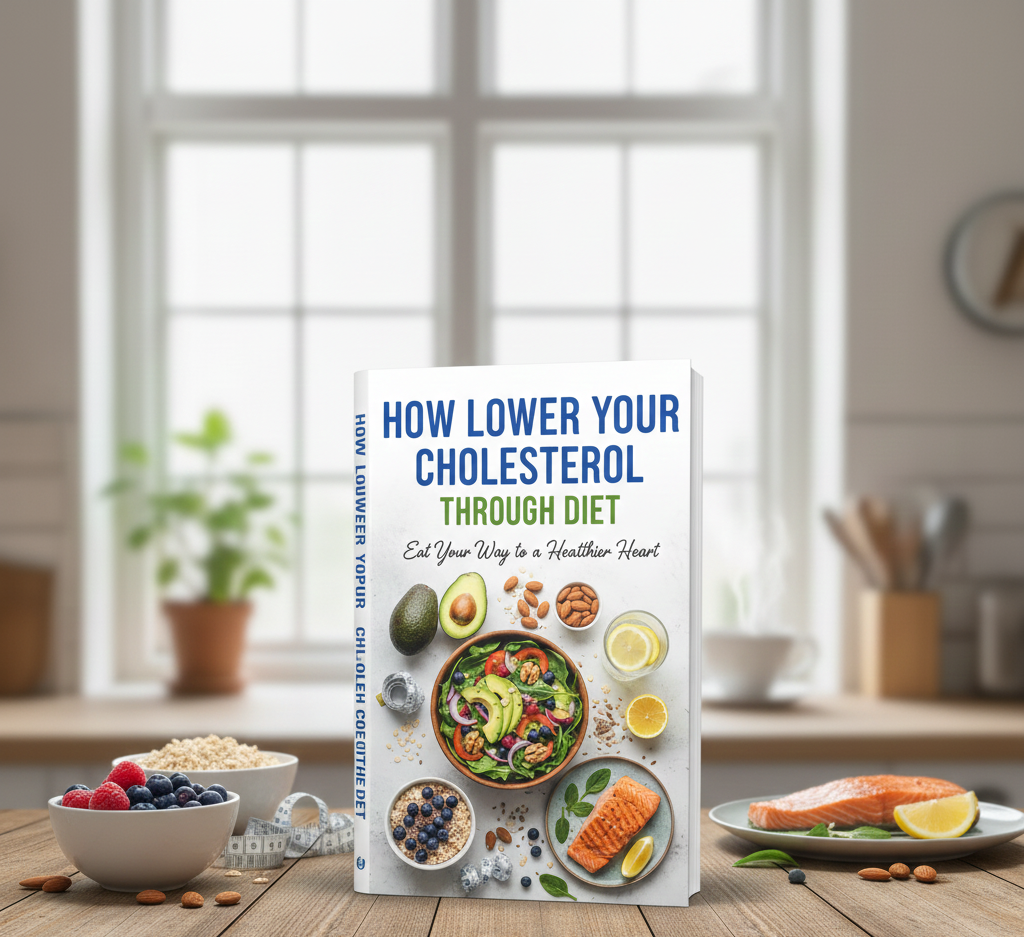
How to Lower Your Cholesterol Through Diet
Introduction: Why Cholesterol Matters
Cholesterol is a word many people hear at the doctor’s office, but not everyone fully understands it. If you have been told that your cholesterol is high, you are not alone. Millions of people in the USA, UK, and Canada struggle with high cholesterol every year.
The good news is this: you can lower your cholesterol through diet. What you eat every day plays a powerful role in your heart health. In many cases, changing food choices can significantly improve cholesterol levels without medication or alongside it.
This article will explain how to lower your cholesterol through diet in a clear and simple way. You will learn:
- What cholesterol is
- The difference between good and bad cholesterol
- Which foods lower cholesterol naturally
- Which foods to avoid
- How to build a cholesterol-lowering meal plan
- Common questions and answers
- Practical tips you can start using today
Everything is explained step by step, using easy English and real-life examples.
What Is Cholesterol? (Simple Explanation)
Cholesterol is a waxy, fat-like substance found in your blood. Your body needs some cholesterol to:
- Build healthy cells
- Make hormones
- Help digest food
Your liver makes all the cholesterol your body needs. However, cholesterol also comes from food, especially foods that come from animals.
Types of Cholesterol
There are two main types of cholesterol you need to know:
1. LDL Cholesterol (Bad Cholesterol)
- LDL stands for low-density lipoprotein
- Too much LDL can build up in your arteries
- This buildup can block blood flow and increase the risk of heart attack and stroke
High LDL = higher heart disease risk
2. HDL Cholesterol (Good Cholesterol)
- HDL stands for high-density lipoprotein
- HDL helps remove LDL from your bloodstream
- It carries bad cholesterol back to the liver to be removed
High HDL = better heart protection
Why Diet Is So Important for Cholesterol
Diet directly affects your cholesterol levels. Some foods raise LDL cholesterol, while others help lower it.
How Food Affects Cholesterol
- Foods high in saturated fat and trans fat increase LDL cholesterol
- Foods high in fiber, healthy fats, and plant compounds help reduce LDL
- Eating better also supports weight loss, which further improves cholesterol
Key Point
You cannot control your genes, but you can control what you eat.
Even small changes in diet can lead to noticeable improvements in cholesterol within weeks.
Can Diet Alone Lower Cholesterol? (Q&A Section)
Q: Can diet alone lower cholesterol without medicine?
A: Yes, for many people. If cholesterol is mildly or moderately high, diet changes can reduce LDL by 10–30%. Some people still need medication, but diet always helps.
Q: How long does it take to see results?
A: Most people see improvements within 4–12 weeks after changing their diet.
Q: Is lowering cholesterol through diet safe?
A: Yes. A heart-healthy diet improves overall health, not just cholesterol.
Top Foods That Lower Cholesterol Naturally

Know Your Pulse
Let’s look at the best foods for a cholesterol-lowering diet.
1. Oats and Whole Grains
Oats are one of the best foods to lower cholesterol.
Why oats help:
- They contain soluble fiber
- Soluble fiber binds cholesterol in the gut and removes it from the body
Best choices:
- Oatmeal
- Oat bran
- Barley
- Whole-grain bread
- Brown rice
Example:
Eating one bowl of oatmeal daily can lower LDL cholesterol by up to 10%.
2. Fruits and Vegetables
Fruits and vegetables are rich in:
- Fiber
- Antioxidants
- Plant compounds
Best fruits for cholesterol:
- Apples
- Berries
- Oranges
- Pears
Best vegetables:
- Broccoli
- Spinach
- Carrots
- Brussels sprouts
Key Tip
Aim for 5 servings of fruits and vegetables per day.
3. Healthy Fats (Good Fats)
Not all fats are bad. Some fats actually help lower cholesterol.
Healthy fat sources:
- Olive oil
- Avocados
- Nuts (almonds, walnuts)
- Seeds (chia, flax)
Why they help:
- They reduce LDL cholesterol
- They increase HDL cholesterol
Example:
Replace butter with olive oil when cooking.
4. Fatty Fish and Omega-3 Fatty Acids
Fatty fish are excellent for heart health.
Best fish choices:
- Salmon
- Sardines
- Mackerel
- Trout
Benefits:
- Lower triglycerides
- Reduce inflammation
- Support heart health
How often?
Eat fatty fish 2 times per week.
5. Nuts and Seeds
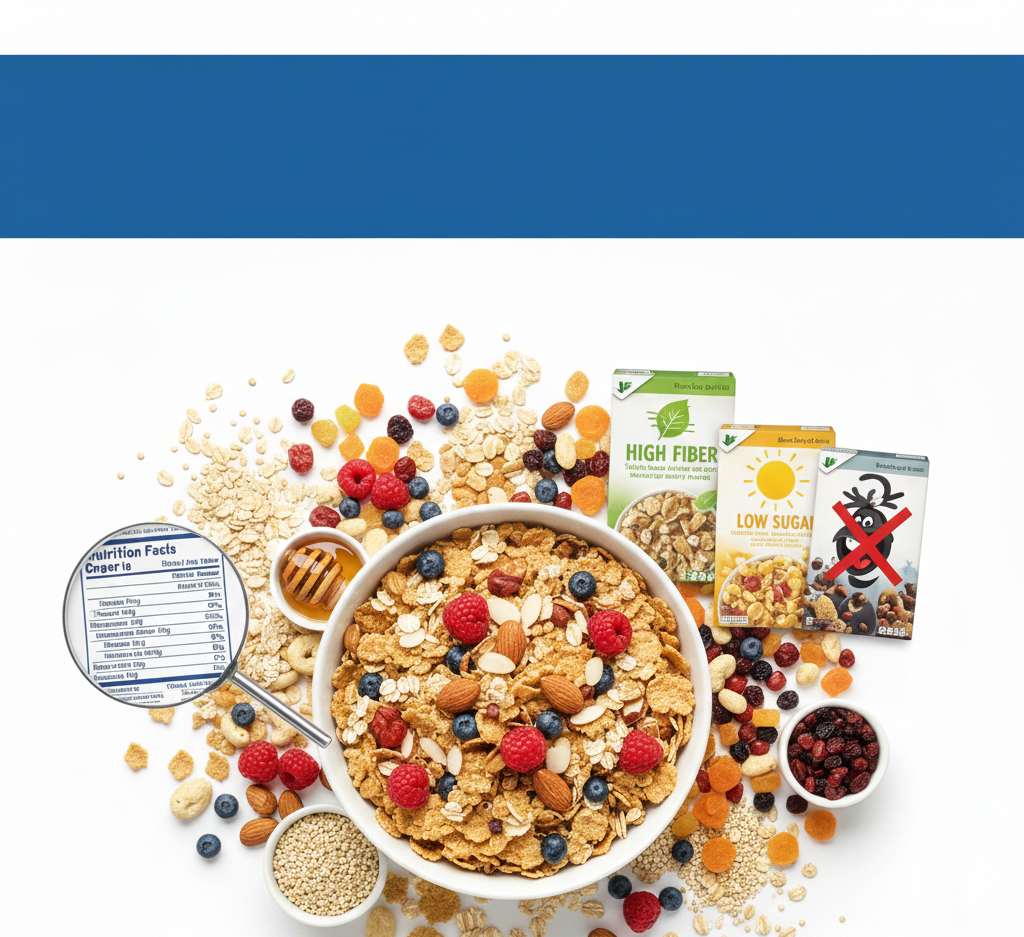
How to Identify Truly Nutritious Breakfast Cereals
Nuts are small but powerful.
Best nuts:
- Almonds
- Walnuts
- Pistachios
Benefits:
- Lower LDL cholesterol
- Provide healthy fats and fiber
Portion tip:
A small handful (about 30 grams) per day is enough.
6. Plant Sterols and Stanols
These are natural compounds found in plants.
How they work:
- Block cholesterol absorption in the gut
Sources:
- Fortified foods (some spreads, yogurts)
- Vegetables and whole grains
Foods to Avoid or Limit
Lowering cholesterol also means knowing which foods to cut back on.
1. Saturated Fats
Saturated fats raise LDL cholesterol.
High-saturated-fat foods:
- Butter
- Full-fat cheese
- Cream
- Fatty cuts of meat
Better choice:
Use low-fat dairy and lean meats.
2. Trans Fats (Very Harmful)
Trans fats are the worst for cholesterol.
Found in:
- Fried foods
- Packaged snacks
- Margarine
- Baked goods
Key Rule
Avoid trans fats completely whenever possible.
3. Processed and Red Meats
These meats often contain:
- Saturated fat
- Added salt
- Preservatives
Limit:
- Bacon
- Sausages
- Hot dogs
Choose instead:
- Chicken
- Turkey
- Fish
- Plant proteins
How to Build a Cholesterol-Lowering Meal Plan
Here is a simple step-by-step guide.
Step 1: Start With Fiber
Every meal should include fiber.
Examples:
- Breakfast: Oatmeal with berries
- Lunch: Whole-grain sandwich with vegetables
- Dinner: Brown rice with vegetables
Step 2: Choose Lean Protein
Healthy protein keeps you full.
Best choices:
- Fish
- Beans
- Lentils
- Skinless chicken
- Tofu
Step 3: Add Healthy Fats
Use healthy fats in moderation.
Examples:
- Olive oil dressing
- Avocado slices
- Nuts as snacks
Step 4: Reduce Salt and Sugar
Too much salt and sugar harm heart health.
Tips:
- Read food labels
- Avoid sugary drinks
- Cook at home more often
Sample One-Day Cholesterol-Lowering Meal Plan
Breakfast:
Oatmeal with blueberries and walnuts
Snack:
Apple with almond butter
Lunch:
Grilled salmon salad with olive oil dressing
Snack:
Low-fat yogurt with flax seeds
Dinner:
Grilled chicken, brown rice, and steamed broccoli
Lifestyle Habits That Support a Cholesterol Diet
Diet works best when combined with healthy habits.
Exercise
- Aim for 30 minutes most days
- Walking, cycling, swimming all help
Weight Management
- Losing even 5–10% of body weight improves cholesterol
Quit Smoking
- Smoking lowers HDL cholesterol
Frequently Asked Questions (Q&A Section)
Q: Are eggs bad for cholesterol?
A: Eggs are fine in moderation for most people. Focus more on overall diet quality.
Q: Is a vegetarian diet good for cholesterol?
A: Yes. Plant-based diets are often very effective at lowering LDL cholesterol.
Q: Do supplements help lower cholesterol?
A: Some supplements help, but food should come first. Always talk to a doctor.
Q: Can children have high cholesterol?
A: Yes. Healthy eating is important at all ages.
Key Points to Remember
Cholesterol can be lowered through diet
Focus on fiber, healthy fats, and whole foods
Avoid trans fats and limit saturated fats
Small changes lead to big improvements
Consistency is more important than perfection
Conclusion: Take Control of Your Cholesterol Naturally
Lowering your cholesterol through diet is one of the best things you can do for your heart and overall health. You do not need complicated plans or extreme diets. Simple, smart food choices made every day can lead to powerful results.
Start small. Add more fiber. Choose healthier fats. Limit processed foods. Over time, these steps can lower your cholesterol, protect your heart, and improve your quality of life.

1 comment
[…] with high cholesterol often benefit […]