In the world of professional food styling and recipe development, people often assume our kitchens are filled with exotic truffles, heavy creams, and gold-leaf desserts. While that might be true for a photo shoot, the reality of a recipe developer’s daily life is much more grounded. After a day spent tasting sugary glazes or testing the structural integrity of a fried appetizer, my body screams for one thing: balance.
For over a decade, my “secret weapon” for maintaining fitness and mental clarity has been homemade soup. In the United States, United Kingdom, and Canada, we often view soup as a side dish or a “sick day” remedy. However, if you treat soup as a primary delivery system for medicine, protein, and hydration, it transforms your health.
This article explores the 14 soups I personally cook and eat to stay lean, energized, and healthy. We will look at the medical benefits of specific ingredients, the science of “satiety” (how to feel full), and how you can master the art of the stockpot.
Part 1: The Science of Soup and Weight Management
Before we dive into the recipes, it is important to understand why health professionals and fitness experts in North America and Europe recommend soup as a staple.
1. The “Pre-Load” Effect
Clinical studies have shown that consuming a low-energy-density soup before a main meal can reduce total calorie intake by up to 20%. This is because the volume of the water combined with fiber from vegetables stretches the stomach lining, sending signals to the brain that you are becoming full. Unlike drinking a glass of water, which passes through the stomach quickly, the “soup matrix” (water bound to fiber) stays in the stomach longer.
2. Bioavailability of Nutrients
In the fitness world, we talk a lot about “what” we eat, but rarely about “how much” we actually absorb. This is called bioavailability.
- Lycopene: Found in tomatoes, this powerful antioxidant is actually more available to your body after it has been cooked and processed with a small amount of fat.
- Carotenoids: The Vitamin A precursors in carrots and squash are better absorbed when heated in a liquid base.
3. Sodium Control and Heart Health
In the UK and USA, the average person consumes nearly double the recommended daily limit of sodium, mostly from processed foods and canned soups. High sodium leads to water retention (bloat) and high blood pressure. By making these 14 recipes at home, you control the salt, using high-quality sea salt or potassium-rich salt substitutes to protect your heart.
Part 2: The 14 Favorite Homemade Soups
1. The “Ultimate Recovery” Turmeric Chicken Noodle
This is the gold standard for post-workout recovery. Traditional chicken soup is good, but “Recipe Developer” chicken soup is functional medicine.
- The Health Angle: We use fresh turmeric root and black pepper. Turmeric contains curcumin, which is a natural anti-inflammatory that helps repair muscle tissue.
- The Fitness Twist: Swap traditional white flour noodles for whole-grain spelt noodles or chickpea pasta to increase fiber and protein.
- Step-by-Step:
- Sauté mirepoix (onion, carrot, celery) in olive oil.
- Add 2 inches of grated fresh turmeric and 1 tablespoon of ginger.
- Add bone-in chicken breasts and cover with filtered water.
- Simmer for 45 minutes; shred the chicken and return to the pot with noodles.
2. Mediterranean Roasted Tomato & Basil (The Skin-Saver)
This soup is a staple in my house during the summer and autumn. It is rich in Vitamin C and Lycopene.
- Key Insight: Instead of using heavy double cream (UK) or heavy whipping cream (USA), I blend in a half-cup of cooked white beans (cannellini). This creates a “cream” texture while adding 15g of fiber and protein.
- Example: If you eat this for lunch, the fiber in the beans prevents the “afternoon slump” by stabilizing your blood sugar.
3. Red Lentil and Spinach Dal
In Canada and the UK, lentils are a budget-friendly superstar. In the world of fitness, they are a “complete” fuel source.
- Nutrient Profile: Lentils provide slow-releasing complex carbohydrates.
- Step-by-Step:
- Toast cumin seeds and mustard seeds in a dry pot until they pop.
- Add red lentils, water, and plenty of garlic.
- Once the lentils are soft (about 20 minutes), stir in four cups of fresh spinach. The heat from the soup will wilt the spinach perfectly, preserving the Vitamin K.
4. The “Green Goddess” Zucchini and Leek
When I feel bloated or sluggish, this is my “reset” meal. It is incredibly low in calories but high in electrolytes like potassium and magnesium.
- Professional Tip: Sauté the leeks until they are completely soft. This removes the harsh onion bite and creates a sweet, buttery base without using actual butter.
- The Finish: Blend until completely smooth. The chlorophyll in the greens helps with internal detoxification.
5. Beef, Barley, and Mushroom (The “Slow-Burn” Dinner)
This is a heavy-hitter for those living in colder climates like Ontario or Northern England. It is a “one-pot” meal that covers all your macros.
- Medical Fact: Barley contains beta-glucan, a type of soluble fiber that has been proven to lower cholesterol levels.
- Fitness Tip: Use lean grass-fed beef to get high levels of Omega-3 fatty acids and Conjugated Linoleic Acid (CLA), which helps with fat burning.
6. Japanese Miso with Silken Tofu and Seaweed
This is the lightest soup on the list, often eaten as a breakfast or a late-night snack.
- Gut Health: Miso is a fermented soy paste. It is a “living” food filled with probiotics.
- Rule of Thumb: Never boil miso. High heat kills the beneficial bacteria. Always whisk it in at the very end after you have turned off the stove.
7. Roasted Butternut Squash with Toasted Pepitas
Squash is a “starchy” vegetable, making it great for replenishing glycogen stores after a leg day at the gym.
- The Texture Secret: Roast the squash in the oven first with cinnamon and nutmeg. This “caramelizes” the natural sugars, making the soup taste sweet without any added sugar.
- Topping: Add pumpkin seeds (pepitas) for a crunch. They are one of the best plant sources of zinc, which is vital for testosterone production and immune health.
8. Quinoa and Black Bean Chili (The Protein Powerhouse)
Chili is often seen as “junk food” when served at a stadium, but a recipe developer’s version is a superfood.
- Why Quinoa? Quinoa is one of the few plants that is a “complete protein,” containing all nine essential amino acids.
- Cooking Step: Treat the quinoa like rice—let it simmer in the chili liquid so it absorbs the chili powder, cumin, and cocoa powder (my secret ingredient for depth).
9. Wild Mushroom and Thyme (The Vitamin D Boost)
Mushrooms are unique because they can produce Vitamin D when exposed to sunlight, much like humans.
- The Recipe Developer’s Trick: Use a mix of mushrooms—cremini, shiitake, and oyster. This creates a “meaty” texture that satisfies the appetite of even the most dedicated carnivore.
- Note: Use fresh thyme, not dried. The essential oils in fresh thyme act as a natural antimicrobial.
10. Greek Lemon Orzo (Avgolemono)
This is the “lightest” feeling comfort food in existence. It uses eggs to create a creamy texture instead of dairy.
- The Science: By tempering eggs into the warm broth, you add high-quality fats and protein. The high lemon content provides a massive hit of Vitamin C, which helps the body produce collagen for healthy skin and joints.
11. Cauliflower and Nutritional Yeast “Cheeze” Soup
If you love “Broccoli and Cheddar” soup but want to lose weight, this is the recipe for you.
- The Swap: Instead of a flour-and-butter roux with heavy cheese, we boil cauliflower and blend it with Nutritional Yeast.
- The Benefit: Nutritional Yeast is a deactivated yeast that tastes like parmesan cheese but is packed with B-vitamins (B12), which are essential for energy levels.
12. Moroccan Chickpea and Sweet Potato
This soup brings the “thermogenic” power of spices. Spices like cayenne, ginger, and cinnamon can slightly increase your metabolic rate.
- The Fiber Factor: One bowl of this soup can provide up to 20g of fiber, which is nearly 80% of the daily recommended intake for women and 50% for men. This keeps your digestion regular and prevents bloating.
13.
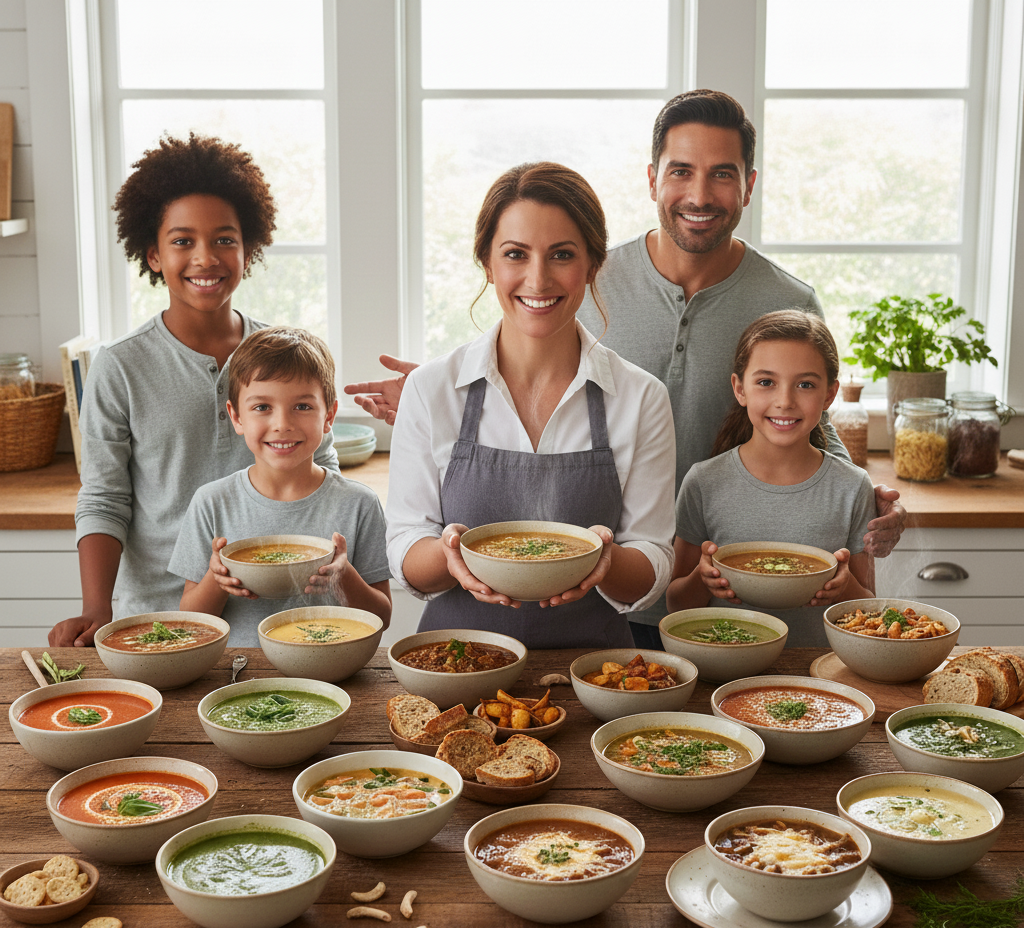
My 14 Favorite Homemade Soups for Health and Longevity
Bone broth has become a massive trend in the USA and Canada, and for good reason. It is rich in collagen and glucosamine.
- Joint Health: For runners or weightlifters, the collagen in bone broth helps repair connective tissue.
- The Variation: Use “Zoodles” (zucchini noodles) instead of rice noodles to keep the glycemic load low before bed.
14. Split Pea and Smoked Paprika
Split peas are the “unsung heroes” of the fitness world. They are incredibly dense in iron.
- The Flavor Secret: Most people use ham hocks for flavor, but I prefer Smoked Paprika (Pimentón). You get that deep, smoky flavor without the nitrates and saturated fats found in processed meats.
Part 3: Step-by-Step Guide to Professional Soup Making
To make these 14 soups successfully, you must master the “Developer’s Workflow.” Use this structure for every pot you start.
Step 1: The Flavor Base (Aromatics)
Every great soup starts with the “Holy Trinity.”
- In France/USA: Onion, Carrot, Celery (Mirepoix).
- In Italy: Onion, Carrot, Celery + Garlic (Soffritto).
- In Asia: Ginger, Garlic, Green Onion.
Action: Sauté these on medium-low heat for at least 10 minutes. Do not rush this. You are building the foundation of the house.
Step 2: Seasoning the Fat
Fat carries flavor. Before you add water or broth, add your dry spices (cumin, paprika, chili flakes) directly to the oil and onions. This “blooms” the spices, releasing their essential oils and making the soup 10x more fragrant.
Step 3: The Liquid Choice
- Water: Best for light, vegetable-forward soups where you want the produce to shine.
- Vegetable Broth: Good for depth, but ensure it is “low sodium.”
- Bone Broth: Best for protein-focused and recovery soups.
Step 4: The Simmer
Never boil a soup aggressively. A “rolling boil” toughens protein and breaks down vegetables into mush. You want a “lazy bubble”—one or two bubbles rising to the surface every second.
Step 5: The “Brightening” Finish
This is what separates home cooks from professional recipe developers. Right before serving, add an acid.
- A squeeze of lime for Asian soups.
- A teaspoon of Sherry vinegar for bean soups.
- Lemon juice for chicken or vegetable soups.
Acid acts like a “volume knob” for flavor, making everything taste sharper and fresher.
Part 4: Key Points for Health, Fitness, and Longevity
To ensure this article helps you rank and provides maximum value, let’s summarize the “Health Pillars” of a soup-based diet:
- Hydration: Many people mistake thirst for hunger. Soup provides “structured water” (water trapped in food), which hydrates you more effectively than plain water.
- Blood Sugar Regulation: By focusing on beans, lentils, and fibrous vegetables, these soups prevent the “insulin spikes” that lead to fat storage.
- Caloric Density: You can eat a massive bowl of these soups (2-3 cups) for under 400 calories, leaving you physically full while remaining in a “caloric deficit” for weight loss.
- Bio-Individual Nutrition: These recipes are easily adaptable. Are you Keto? Increase the olive oil and avocado. Are you Vegan? Use lentils and nutritional yeast. Are you Paleo? Focus on the bone broth and lean meats.
Part 5: Question and Answer Section (Q&A)
Q1: Is it healthy to eat soup every day?
A: Absolutely. In fact, many cultures with the highest longevity (the “Blue Zones”) consume a vegetable and bean-based soup (like Minestrone) almost every day. The key is variety. Do not eat the same soup every day; rotate through the 14 recipes above to ensure you get a wide spectrum of phytonutrients.
Q2: How can I make my soups taste better without adding salt?
A: As a recipe developer, I use “Umami” boosters. Add a tablespoon of tomato paste, a splash of coconut aminos, or a piece of dried Kombu (seaweed) to your broth. These provide a savory “meatiness” that tricks your tongue into thinking there is more salt than there actually is.
Q3: Can soup help with muscle gain?
A: Yes, if you prioritize the “Protein Staples.” My Lentil Dal, Beef and Barley, and Quinoa Chili are all high-protein meals. For an extra boost, you can blend unflavored collagen powder into any warm soup—it dissolves completely and adds 10-20g of protein without changing the taste.
Q4: What is the best way to store and reheat soup for meal prep?
A: Use glass containers instead of plastic to avoid BPA leaching, especially when the soup is warm.
- Fridge: 4 to 5 days.
- Freezer: 3 to 6 months.
Pro Tip: Freeze soup in muffin tins or silicone “soup cubes.” Once frozen, pop them into a freezer bag. This allows you to reheat a single portion (one or two cubes) instead of the whole batch.
Q5: I live in Canada/UK where winter is long. Which soup is best for Seasonal Affective Disorder (SAD)?
A: Focus on the Wild Mushroom Soup (for Vitamin D) and the Moroccan Chickpea Soup. The “warm” spices like cinnamon and turmeric have been linked in some studies to mood regulation and reduced inflammation in the brain.
Part 6: Example Meal Plan Using the 14 Soups
To help you integrate this into a fitness lifestyle, here is a 3-day “Soup-Powered” example:
Day 1: The Recovery Day
- Breakfast: Two boiled eggs.
- Lunch: Mediterranean Roasted Tomato Soup with a side salad.
- Dinner: Turmeric Chicken Noodle Soup (Focus on muscle repair).
Day 2: The High-Energy Day
- Breakfast: Greek yogurt with berries.
- Lunch: Quinoa and Black Bean Chili (Provides complex carbs for the afternoon).
- Dinner: Japanese Miso Soup with extra tofu and steamed salmon.
Day 3: The Digestive Reset
- Breakfast: Green smoothie.
- Lunch: Green Goddess Zucchini Soup.
- Dinner: Red Lentil Dal with a small side of brown rice.
Part 7: Comparison Table for Quick Reference
| Soup Name | Best For | Cooking Time | Top Nutrient |
| Turmeric Chicken | Post-Workout | 45 Mins | Curcumin |
| Red Lentil Dal | Vegan Protein | 25 Mins | Iron |
| Beef & Barley | Satiety / Hunger | 90 Mins | Beta-Glucan |
| Miso Soup | Digestion | 10 Mins | Probiotics |
| Tomato Basil | Antioxidants | 30 Mins | Lycopene |
| Quinoa Chili | Strength | 40 Mins | Amino Acids |
| Green Goddess | Weight Loss | 20 Mins | Magnesium |
Conclusion: The “Developer’s” Philosophy
Eating well shouldn’t be a chore. In my career, I have learned that the most successful “diets” are the ones that don’t feel like diets. A bowl of homemade soup is warm, comforting, and deeply satisfying. It connects us to our ancestors, who survived on stews and broths for millennia.
By using the 14 recipes and the professional techniques outlined here, you are not just making “lunch.” You are making a medical investment in your heart, your gut, and your muscles. Whether you are in the busy streets of London, the cold winters of Toronto, or the sunny coasts of California, these soups are your path to a simpler, healthier life.

2 comments
[…] To understand what makes a cereal “good,” we must first understand what happens inside your body when you eat. […]
[…] Use portion control and practice mindful eating. […]