Building strength doesn’t always require expensive gym equipment, dumbbells, or barbells. With the right approach, you can build muscle, improve endurance, and boost metabolism using simple, equipment-free exercises. These exercises are perfect for home workouts, travel routines, or busy schedules.
In this article, we’ll explore the science behind bodyweight strength training, introduce effective equipment-free exercises, provide a sample workout plan, and explain how to maximize results safely and efficiently.
Why Strength Training Without Weights Works
Many people believe lifting heavy weights is the only way to gain strength. However, bodyweight exercises can be equally effective if done correctly. Here’s why:
- Engages Multiple Muscle Groups: Compound bodyweight movements like push-ups and squats work multiple muscles simultaneously.
- Functional Strength: These exercises improve strength in ways that translate to everyday moveme
https://healthandfitnesstopguide.com/eating-clean-and-exercising-but-not-losing-weight/
nts, such as lifting, pushing, or bending.
- Progressive Overload Possible: You can increase intensity by adjusting leverage, reps, sets, or time under tension.
- Reduced Injury Risk: Without heavy weights, the risk of joint or tendon injuries is lower.
- Convenience: You can perform these workouts anywhere—at home, in a park, or even your hotel room while traveling.
The Science Behind Bodyweight Strength Training
Muscle Activation
Bodyweight exercises work through isometric, concentric, and eccentric muscle contractions, which help stimulate muscle growth and endurance.
- Isometric: Muscle contracts without changing length (plank, wall sit).
- Concentric: Muscle shortens during contraction (push-up up phase).
- Eccentric: Muscle lengthens under tension (lowering during pull-ups).
Progressive Overload
Even without weights, you can challenge muscles progressively by:
- Increasing repetitions
- Slowing down the movement
- Adding holds or pulses
- Using unilateral (single-limb) variations
Best Equipment-Free Exercises for Strength
Here are some highly effective bodyweight exercises to build strength faster than traditional weightlifting:
1. Push-Ups
- Targets chest, shoulders, triceps, and core.
- Variations: standard, diamond, wide-grip, incline, decline.
- Tip: Maintain a straight back and engage core.
2. Squats
- Targets quads, hamstrings, glutes, and core.
- Variations: standard, jump squats, pistol squats (single leg), pulse squats.
- Tip: Keep knees aligned over toes and chest up.
3. Planks
- Strengthens core, shoulders, and glutes.
- Variations: forearm plank, side plank, plank with shoulder taps.
- Tip: Avoid sagging hips or raised buttocks.
4. Lunges
- Works quads, glutes, hamstrings, and improves balance.
- Variations: forward, backward, side lunges, jumping lunges.
- Tip: Step far enough that knees stay behind toes.
5. Dips (Using Chair or Step)
- Strengthens triceps, chest, and shoulders.
- Tip: Keep elbows close to the body and avoid shrugging shoulders.
6. Glute Bridges
- Targets glutes, hamstrings, and lower back.
- Variations: single-leg glute bridge, hip thrust holds.
- Tip: Squeeze glutes at the top for maximum activation.
7. Burpees
- Full-body exercise targeting multiple muscles and improving cardiovascular endurance.
- Tip: Perform controlled movements to avoid knee or wrist strain.
Sample 30-Minute Equipment-Free Strength Workout
| Exercise | Reps/Sets | Rest |
| Push-Ups | 15 reps x 3 sets | 30 sec |
| Squats | 20 reps x 3 sets | 30 sec |
| Plank | 45 sec x 3 sets | 30 sec |
| Lunges | 12 reps each leg x 3 sets | 30 sec |
| Glute Bridges | 15 reps x 3 sets | 30 sec |
| Burpees | 10 reps x 3 sets | 30 sec |
Tip: Warm-up for 5–10 minutes before starting and stretch after your workout.
Advanced Techniques for Maximum Results
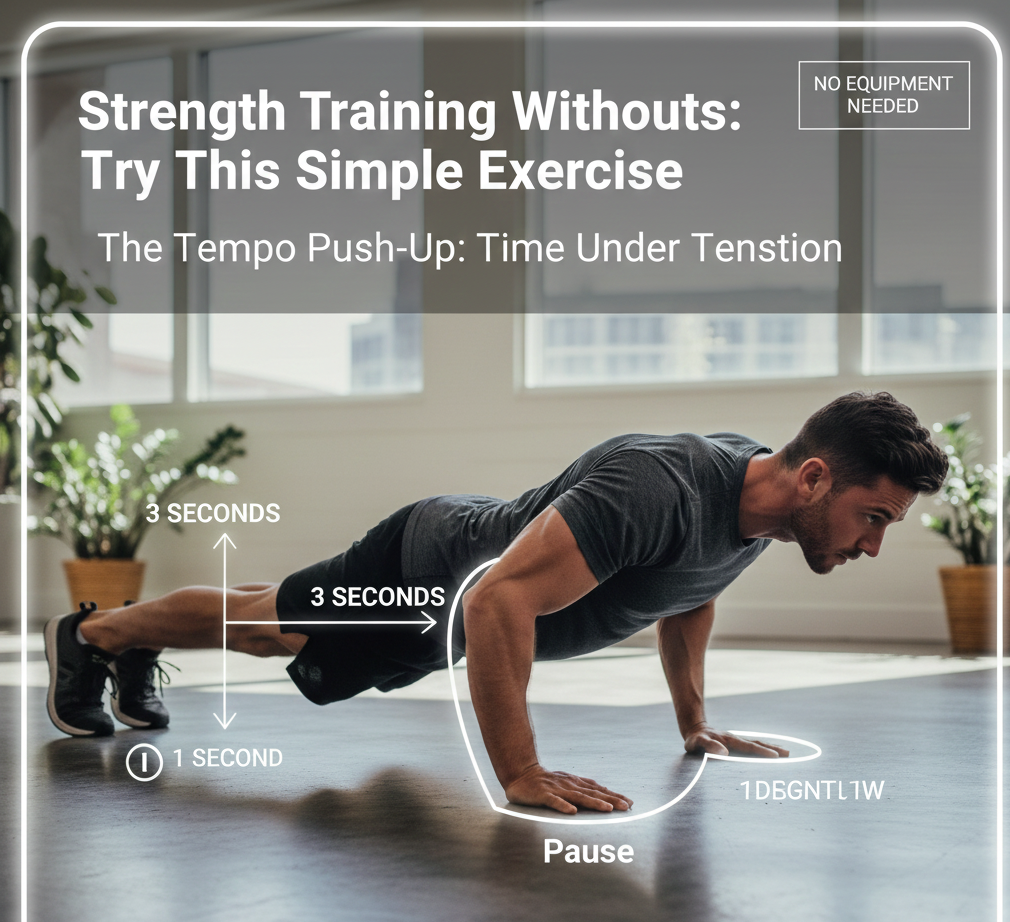
- Tempo Training: Slow down movements for 3–5 seconds to increase time under tension.
- Unilateral Training: Focus on single-leg or single-arm exercises to correct imbalances.
- Supersets: Combine two exercises back-to-back without rest to increase intensity.
- Isometric Holds: Pause at peak contraction (e.g., bottom of push-up) to maximize strength gains.
- Plyometric Movements: Add jumps to increase power and explosiveness.
Benefits of Strength Training Without Weights
- Builds Lean Muscle
Even without heavy weights, bodyweight exercises like push-ups, squats, and lunges stimulate muscle fibers, helping you build lean muscle mass. Lean muscle increases metabolism, which helps burn more calories even at rest. - Improves Functional Strength
Bodyweight exercises mimic natural movements used in daily life, such as pushing, pulling, lifting, and bending. This functional strength makes everyday tasks easier and reduces the risk of injury. - Enhances Core Stability
Most equipment-free exercises require balance and stabilization, engaging your core muscles continuously. Exercises like planks, lunges, and push-ups improve posture and strengthen abdominal and back muscles. - Increases Flexibility and Mobility
Bodyweight movements often involve a full range of motion, improving joint flexibility and mobility over time. This helps reduce stiffness and supports better athletic performance. - Burns Fat Efficiently
High-intensity bodyweight workouts like burpees, jump squats, and mountain climbers elevate heart rate and boost calorie burn, making them excellent for fat loss alongside muscle building. - Reduces Risk of Injury
Without heavy weights, stress on joints, tendons, and ligaments is lower. Bodyweight exercises allow controlled movements, which minimizes the risk of injury compared to lifting heavy dumbbells or barbells. - Convenient and Cost-Effective
No gym, weights, or machines are needed. You can perform these exercises anywhere—at home, in a park, or while traveling. This makes strength training accessible and affordable. - Adaptable for All Fitness Levels
Exercises can be modified to suit beginners or advanced trainees. For example, knee push-ups for beginners or one-arm push-ups for advanced strength building. - Supports Weight Loss and Metabolism
Strength training without weights increases muscle mass, which in turn boosts metabolism. A higher metabolism helps in burning calories more efficiently, supporting weight loss and body recomposition. - Boosts Mental Health and Confidence
Regular bodyweight strength training releases endorphins, improves mood, reduces stress, and increases overall confidence in physical abilities.
Tips for Strength Training Without Weights
- Focus on Proper Form – Always maintain correct posture to prevent injuries and maximize results.
- Warm-Up First – 5–10 minutes of dynamic stretches or light cardio prepares your muscles.
- Use Progressive Overload – Gradually increase reps, sets, or time under tension to keep challenging your muscles.
- Include Compound Movements – Push-ups, squats, and lunges engage multiple muscles for efficiency.
- Incorporate Core Exercises – Planks, glute bridges, and mountain climbers strengthen your core.
- Rest and Recover – Give 24–48 hours for muscle groups to recover after intense sessions.
- Stay Consistent – Regular short workouts are more effective than occasional intense ones.
- Mix Intensity Levels – Combine moderate and high-intensity exercises for strength and fat loss.
- Track Your Progress – Record reps, sets, and variations to monitor improvement.
- Combine with Proper Nutrition – Eat enough protein and balanced meals to support muscle growth and recovery.
- Stay Hydrated – Drink 2–3 liters of water daily for optimal performance.
- Challenge Yourself Safely – Gradually try advanced variations only when form is perfect.
- Include Mobility Work – Stretching and mobility exercises prevent stiffness and improve range of motion.
- Set Realistic Goals – Focus on gradual progress rather than overnight results.
- Enjoy the Process – Keep workouts fun and varied to stay motivat
Conclusion
Strength training doesn’t require expensive equipment or gym memberships. By performing simple, equipment-free exercises, you can build lean muscle, increase metabolism, improve endurance, and transform your body. With consistency, proper form, and progressive overload, bodyweight workouts can be just as effective, if not more efficient, than traditional weightlifting.
Whether you’re at home, traveling, or just starting your fitness journey, these exercises provide a flexible, convenient, and effective way to gain strength without weights.
Q&A: Strength Training Without Weights
Q1: Can you build muscle without weights?
Yes, bodyweight exercises like push-ups, squats, and planks effectively build muscle when done with proper form and progressive overload.
Q2: How often should I do strength training without weights?
3–5 times per week, allowing 24–48 hours of recovery for each muscle group.
Q3: What are the best exercises for building strength without weights?
Push-ups, squats, lunges, planks, glute bridges, dips using a chair, and burpees.
Q4: How long does it take to see results?
With consistent training and proper nutrition, noticeable strength and muscle tone can appear in 4–8 weeks.
Q5: Can bodyweight exercises replace gym workouts?
Yes, for most fitness goals including strength, endurance, and fat loss. Advanced lifters may need extra resistance for hypertrophy.
Q6: Do I need a warm-up before bodyweight workouts?
Absolutely. A 5–10 minute warm-up with dynamic stretches prepares muscles and reduces injury risk.
Q7: How do I make bodyweight exercises more challenging?
Increase reps, slow down tempo, add holds, or try unilateral variations like single-leg squats.
Q8: Can bodyweight exercises burn fat?
Yes. High-intensity movements like burpees and jump squats elevate heart rate and promote fat burning.
Q9: Are bodyweight exercises safe for beginners?
Yes. Start with easier variations, maintain proper form, and progress gradually.
Q10: How do I track progress without weights?
Track reps, sets, time under tension, exercise variations, and take progress photos.
Q11: Can bodyweight exercises improve posture?
Yes. Core-engaging exercises like planks, bridges, and push-ups strengthen postural muscles.
Q12: How important is rest between workouts?
Rest is essential. 24–48 hours recovery allows muscles to repair and grow stronger.
Q13: Can I build endurance with bodyweight exercises?
Yes. Circuit workouts and high-rep sets improve muscular endurance and cardiovascular fitness.
Q14: Should I combine cardio with strength training?
Yes. Combining cardio and bodyweight strength exercises maximizes fat loss and overall fitness.
Q15: Can I gain strength at home without equipment?
Absolutely. Consistency, progressive overload, and proper form are key.
Q16: Do I need to eat more protein for bodyweight strength training?
Yes. Protein supports muscle repair and growth. Include lean meats, eggs, legumes, and dairy.
Q17: Can bodyweight exercises improve flexibility?
Yes. Movements like lunges, squats, and planks engage a full range of motion, improving flexibility and mobility.
Q18: How do I avoid injuries during bodyweight training?
Focus on proper form, warm-up, start slow, and increase intensity gradually.
Q19: Are bodyweight workouts suitable for seniors?
Yes. Modified exercises can improve strength, balance, and functional fitness safely.
Q20: Can I do bodyweight training while traveling?
Absolutely. No equipment is required, making it perfect for hotel rooms, parks, or outdoor spaces.
Q21: How do I challenge myself without weights?
Use variations, add plyometrics, increase reps, slow down tempo, or perform unilateral exercises.
Q22: Can bodyweight training improve balance?
Yes. Exercises like single-leg squats and lunges strengthen stabilizing muscles and improve balance.
Q23: Is it necessary to combine bodyweight exercises with weights?
Not always. Bodyweight training alone can build strength, endurance, and improve body composition.
Q24: Can I do bodyweight workouts daily?
Yes, if you vary intensity and muscle groups. Include rest or active recovery days.
Q25: Can beginners start with advanced exercises?
No. Start with basic variations and gradually progress to advanced movements to avoid injuries.
Q26: How does sleep affect bodyweight strength training?
Adequate sleep supports recovery, muscle growth, and energy for workouts.
Q27: Can stress affect bodyweight training results?
Yes. High stress increases cortisol, which may hinder recovery and muscle growth.
Q28: Should I combine bodyweight exercises with yoga or stretching?
Yes. Stretching improves flexibility, reduces injury risk, and enhances performance.
Q29: How do I make workouts fun without equipment?
Mix exercises, try circuits, add challenges, or workout with a friend to stay motivated.
Q30: What is the key to success with strength training without weights?
Consistency, proper form, progressive overload, adequate nutrition, and rest are the keys to achieving results.

1 comment
[…] and often reduces muscle control. If you want to improve your muscle strength, stability, and overall fitness safely, the Pause Rep Method is a technique you should […]