As we grow older, maintaining balance becomes increasingly important. Poor balance can lead to falls, fractures, and loss of independence, especially after the age of 50. Fortunately, balance training can help strengthen muscles, improve coordination, and enhance overall stability.
This article explores why balance exercises are essential for healthy aging and introduces 5 simple yet effective exercises that you can start today. T
Why Balance Training is Essential
Balance is more than just standing on one leg—it’s a combination of muscle strength, coordination, and core stability. Here’s why it’s crucial:
- Reduces Fall Risk – Falls are a leading cause of injuries in older adults. Balance training strengthens muscles used to stabilize the body.
- Supports Independence – Strong balance allows you to move confidently in daily activities, such as climbing stairs or carrying groceries.
- Enhances Posture – Balance exercises improve spinal alignment and reduce the risk of back or joint pain.
- Boosts Coordination and Agility – Helps maintain proper body control, which is vital for mobility.
- Improves Overall Strength – Many balance exercises engage core and leg muscles, contributing to overall fitness.
Chart: Benefits of Balance Training
| Benefit | How It Helps You |
| Reduces fall risk | Prevents fractures and injuries |
| Supports independence | Maintains mobility in daily activities |
| Enhances posture | Reduces back and joint pain |
| Boosts coordination | Improves body control and movement accuracy |
| Improves strength | Engages core and lower-body muscles |
5 Best Balance Exercises to Try Now
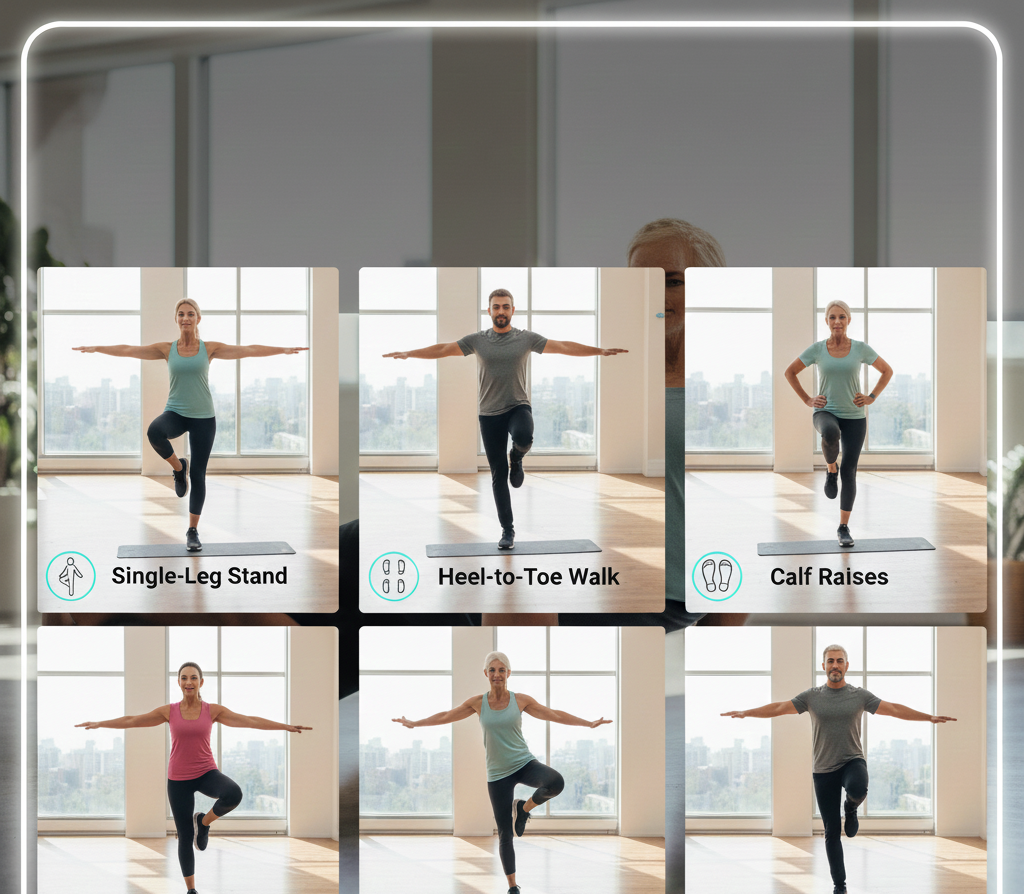
These exercises are designed to improve stability and coordination for adults over 50. Aim for 1–2 sets of 10–15 repetitions or hold each position for 20–30 seconds.
1. Single-Leg Stand
How to Do:
- Stand tall with feet hip-width apart.
- Lift one foot off the ground, balancing on the other leg.
- Keep your core engaged and shoulders relaxed.
- Hold for 20–30 seconds, then switch legs.
Benefits: Strengthens leg muscles, improves stability, and enhances coordination.
2. Heel-to-Toe Walk
How to Do:
- Find a straight line on the floor or imagine one.
- Step forward, placing the heel of one foot directly in front of the toes of the other.
- Continue for 10–15 steps, focusing on maintaining balance.
Benefits: Improves gait, strengthens ankles, and reduces fall risk.
3. Side Leg Raises
How to Do:
- Stand straight with feet hip-width apart, holding a chair for support if needed.
- Slowly lift one leg to the side, keeping it straight.
- Hold for 2–3 seconds and lower.
- Repeat 10–15 times per leg.
Benefits: Strengthens hip and outer thigh muscles, enhancing lateral stability.
4. Standing Marches
How to Do:
- Stand tall, engage your core, and lift one knee to hip level.
- Lower it slowly and lift the other knee.
- Continue marching in place for 30–60 seconds.
Benefits: Improves dynamic balance, strengthens hip flexors, and enhances coordination.
5. Bosu or Cushion Balance (Optional Advanced)
How to Do:
- Stand on a balance cushion or Bosu ball with feet hip-width apart.
- Engage your core and lift one foot slightly, maintaining balance.
- Hold for 15–30 seconds per leg.
Benefits: Challenges the core and stabilizing muscles, further improving balance and proprioception.
Tips for Safe and Effective Balance Training
- Use Support if Needed – A chair or countertop can help prevent falls during exercises.
- Wear Proper Footwear – Supportive shoes improve stability.
- Focus on Core Engagement – Tighten abdominal muscles for better control.
- Start Slow – Begin with simple exercises and gradually progress to advanced movements.
- Practice Regularly – Consistency is more effective than occasional long sessions.
- Include Strength Training – Strong legs and core muscles enhance balance.
- Stay Hydrated – Adequate water intake supports muscle function.
t.
Chart: Quick Exercise Overview
| Exercise | Reps / Duration | Target Area | Key Benefit |
| Single-Leg Stand | 20–30 sec / leg | Legs & core | Improves static balance |
| Heel-to-Toe Walk | 10–15 steps | Feet & ankles | Enhances gait & coordination |
| Side Leg Raises | 10–15 / leg | Hips & thighs | Strengthens lateral stability |
| Standing Marches | 30–60 sec | Core & hips | Improves dynamic balance |
| Bosu / Cushion Balance | 15–30 sec / leg | Core & stabilizers | Advanced balance & proprioception |
Common
Stay Steady as You Age: 5 Best Balance Exercises for Healthy Living
While balance exercises are safe and effective, some common errors can reduce results or even increase injury risk. Here’s what to watch out for:
1. Not Using Support When Needed
- Mistake: Trying advanced exercises without a chair, wall, or countertop for support.
- Tip: Always have something stable nearby, especially when starting out, to prevent falls.
2. Holding Breath
- Mistake: Forgetting to breathe during exercises.
- Tip: Keep breathing normally; exhale during effort, inhale while returning to starting position.
3. Rushing Through Exercises
- Mistake: Performing movements too quickly.
- Tip: Move slowly and deliberately. Controlled movements improve muscle activation and stability.
4. Poor Posture
- Mistake: Slouching, leaning forward, or locking knees.
- Tip: Keep your spine straight, shoulders relaxed, and core engaged for maximum benefit.
5. Skipping Warm-Up
- Mistake: Starting exercises with stiff muscles.
- Tip: Perform a 2–3 minute warm-up, such as marching in place or gentle ankle circles, to prepare your muscles.
6. Overdoing Advanced Exercises
- Mistake: Progressing too quickly to challenging moves like Bosu balances.
- Tip: Start with basic exercises, then gradually increase difficulty as confidence and strength improve.
7. Ignoring Pain
- Mistake: Continuing exercises despite discomfort or sharp pain.
- Tip: Mild muscle fatigue is normal, but stop immediately if you feel pain and consult a healthcare professional if necessary.
Tips for Effective Balance Training
- Start Slowly: Begin with simple exercises like single-leg stands or heel-to-toe walks. Gradually progress to more advanced moves as your strength improves.
- Use Support: A chair, countertop, or wall can provide stability, especially when trying new exercises.
- Engage Your Core: Tighten abdominal muscles during all exercises to improve control and stability.
- Focus on Posture: Keep your spine straight, shoulders relaxed, and head aligned. Good posture enhances balance.
- Consistency is Key: Practice 3–5 times per week for best results. Short daily sessions are more effective than occasional long workouts.
- Combine with Strength Training: Strong legs and core muscles significantly improve balance and reduce fall risk.
- Wear Proper Footwear: Supportive shoes provide better grip and stability.
- Warm-Up Before Starting: Gentle marching, ankle circles, or light stretches prepare muscles and joints.
- Progress Gradually: Avoid overdoing advanced exercises like Bosu or cushion balances until confident with basics.
- Stay Hydrated and Eat Well: Adequate water intake and a healthy diet support muscle and joint function.
Benefits of Balance Exercises
- Reduces Fall Risk: Strengthens stabilizing muscles to prevent slips and fractures.
- Improves Posture: Helps maintain proper spinal alignment and reduces back or joint pain.
- Enhances Mobility: Enables confident movement in daily activities like climbing stairs or walking.
- Strengthens Core and Legs: Engages muscles essential for stability and functional fitness.
- Boosts Coordination and Agility: Improves body awareness and reaction time.
- Supports Independence: Maintains the ability to perform daily tasks safely.
- Promotes Confidence: Reduces fear of falling, encouraging a more active lifestyle.
Chart: Tips and Benefits Overview
| Tips | Benefits |
| Start slowly | Reduces injury risk |
| Use support | Prevents falls |
| Engage core | Improves stability |
| Focus on posture | Enhances alignment and reduces pain |
| Be consistent | Ensures long-term improvement |
| Combine with strength training | Builds stronger muscles and joints |
| Wear proper footwear | Provides grip and balance |
| Warm-up before exercises | Prepares muscles and joints |
| Progress gradually | Prevents strain and improves results |
| Stay hydrated & eat well | Supports muscle and joint health |
Conclusion
Balance training is a crucial part of healthy aging. Incorporating simple exercises like single-leg stands, heel-to-toe walks, and standing marches into your weekly routine can reduce fall risk, strengthen muscles, and improve overall stability.
Start slowly, focus on consistency, and gradually increase intensity. Over time, you’ll notice better coordination, posture, and confidence in daily movements—helping you stay steady, strong, and independent as you age.
Q&A: Balance Exercises for Healthy Aging
- Q: What is balance training?
A: Balance training involves exercises that improve stability, coordination, and muscle control to prevent falls. - Q: Why is balance important as we age?
A: Good balance reduces the risk of falls, supports mobility, and helps maintain independence. - Q: At what age should I start balance exercises?
A: It’s beneficial to start at any age, but especially important after 50. - Q: How often should I do balance exercises?
A: Aim for 3–5 times per week for 5–10 minutes per session. - Q: Can balance exercises prevent falls completely?
A: They reduce fall risk significantly but cannot eliminate it entirely. - Q: Are these exercises safe for older adults?
A: Yes, especially when done slowly, with support, and proper posture. - Q: How soon will I notice improvement?
A: Many people see better stability in 4–6 weeks with consistent practice. - Q: Do I need any special equipment?
A: Most exercises require no equipment, but a chair or cushion can help. - Q: What is a single-leg stand?
A: Standing on one leg while keeping the core engaged to improve balance and leg strength. - Q: How long should I hold a single-leg stand?
A: 20–30 seconds per leg is ideal for beginners. - Q: What are heel-to-toe walks?
A: Walking in a straight line placing the heel of one foot directly in front of the other to improve gait and balance. - Q: How many steps should I do for heel-to-toe walks?
A: 10–15 steps forward, then return. - Q: What are side leg raises?
A: Lifting one leg to the side while standing to strengthen hip and outer thigh muscles. - Q: How many repetitions for side leg raises?
A: 10–15 reps per leg, 1–2 sets. - Q: What are standing marches?
A: Lifting knees alternately as if marching in place to strengthen core and improve dynamic balance. - Q: How long should I march in place?
A: 30–60 seconds per session. - Q: Can advanced balance exercises be done on a Bosu or cushion?
A: Yes, but only after mastering basic exercises. - Q: How often should I warm up before balance exercises?
A: 2–3 minutes of light activity, such as ankle circles or gentle marching. - Q: Why is core engagement important?
A: A strong core stabilizes your spine and helps maintain balance. - Q: What posture should I maintain during balance exercises?
A: Keep your spine straight, shoulders relaxed, and head aligned. - Q: Can balance exercises improve posture?
A: Yes, they strengthen stabilizing muscles and encourage proper alignment. - Q: Are balance exercises only for older adults?
A: No, they benefit all ages but are especially crucial for adults over 50. - Q: Can balance training help with joint stability?
A: Yes, it strengthens muscles around joints, reducing risk of injuries. - Q: Should I combine balance exercises with strength training?
A: Yes, stronger muscles improve stability and reduce fall risk. - Q: Can balance exercises improve confidence?
A: Yes, better stability reduces fear of falling, encouraging more active movement. - Q: How long should a full balance exercise session last?
A: About 5–10 minutes for beginners; longer as strength improves. - Q: Can I do these exercises at home?
A: Absolutely; no special equipment is needed for most exercises. - Q: Is it normal to feel slight wobbling during exercises?
A: Yes, it means your muscles are being activated. Focus on control. - Q: Should I stop if I feel pain?
A: Yes, mild fatigue is normal, but sharp pain requires stopping and consulting a professional. - Q: Can balance exercises improve overall fitness?
A: Yes, they strengthen muscles, enhance coordination, and support cardiovascular health when combined with other exercises.

2 comments
[…] Investing in Home Gym Equipment is Worth […]
[…] Science showed that moving every day is more helpful than exercising hard once in a while. […]