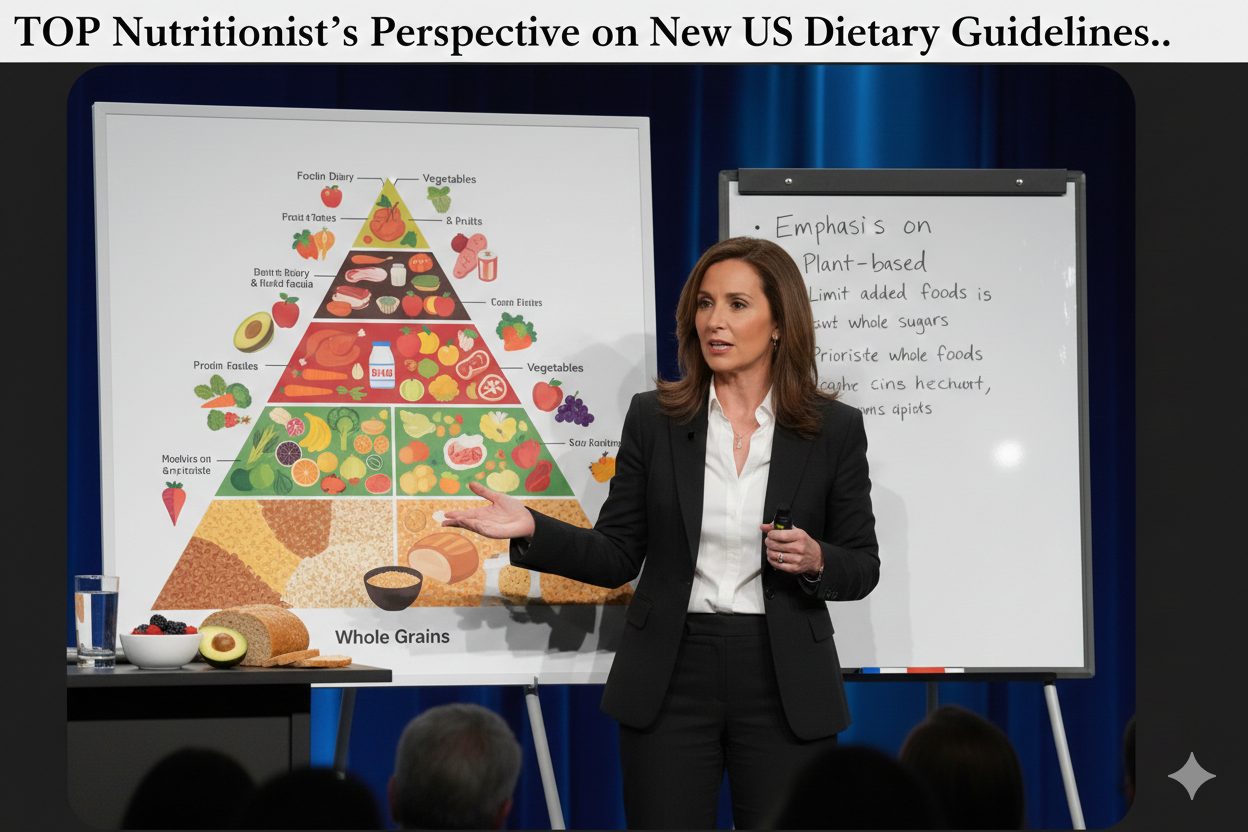
The Nutritionist’s Perspective on the New US Dietary Guidelines provides an expert look at America’s latest dietary advice. From protein priorities to fruits, vegetables, whole grains, healthy fats, sugar, and alcohol, these new recommendations aim to improve public health and reduce diet-related diseases.
While some experts welcome the focus on whole, minimally processed foods, others caution that certain guidance — such as increased animal protein and saturated fats — may not suit everyone. Understanding this perspective helps readers make smarter, balanced dietary choices for long-term health.
The Big Picture: A Radical Shift in U.S. Dietary Advice
The new guidelines take an inverted food pyramid approach — prioritizing protein sources like meat, eggs, and dairy as equally important to vegetables and fruits, and taking a much stronger stance against ultra-processed foods (UPFs). Kennedy also reframes how fats are viewed, challenging the long-held belief that all fats are harmful and pushing back against decades of low-fat dietary thinking.
Some nutrition experts have praised these changes as a much-needed update; others see parts of the plan as controversial or insufficiently evidence-based.
Why Some Experts Support the New Guidelines
Several well-known health professionals have publicly endorsed the direction of the new recommendations:
-
Award-winning scientist Tim Spector described the shift as a “genuinely welcome shift,” appreciating the emphasis on whole foods and reduced processing.
-
Dr. Mark Hyman, a leading figure in functional medicine, called it a “course correction” away from outdated nutritional dogma.
-
Biohacker Bryan Johnson labeled the update a “significant upgrade” to previous guidelines.
Supporters generally agree that:
Reducing ultra-processed foods is a positive step
Prioritizing whole, nutrient-dense foods aligns with modern nutrition science
The shift away from fear-based fat avoidance could help correct misguided dietary trends
Nutritionists’ Concerns and Criticisms
Not all experts are convinced the new guidelines are beneficial in their current form. Some of the most common critiques include:
1. Protein Recommendations Are Too High
The new U.S. advice suggests adults consume between 1.2–1.8 grams of protein per kilogram of body weight per day — significantly more than current U.K. and global standards.
Critics say:
-
Most Americans already eat more protein than recommended.
-
Higher animal protein intake is linked to increased risk of some cancers (colon, breast, prostate) and cardiovascular disease.
-
Extra protein does not necessarily build muscle unless combined with strength training.
2. Ultra-Processed Foods Definition Is Vague
Although minimizing UPFs sounds sensible, experts say the definition is too broad and unclear. Many foods considered “ultra-processed” include both healthy and unhealthy options, making practical application confusing for the average consumer.
3. Fat Guidance Sends Mixed Messages
The guidelines emphasize healthy fats like nuts, seeds, and olive oil but also encourage cooking with saturated fats such as butter and beef tallow. Critics find this confusing, as saturated fats are linked to heart disease when consumed in excess.
4. Sugar and Sweetener Limits May Be Arbitrary
The recommendation to limit added sugars to 10 grams per meal has been questioned as lacking strong evidence, especially compared to stricter U.K. limits on daily free sugars.
Where the New Guidelines Align With Good Nutrition
Even critics acknowledge that several recommendations are beneficial and supported by evidence:
-
Eat more vegetables and fruits
-
Choose whole grains instead of refined carbohydrates
-
Minimize sugary drinks and highly processed snacks
-
Limit alcohol for overall health benefits
These points are consistent with healthy eating principles backed by decades of research.
Comparing the U.S. and U.K. Dietary Advice
| Topic | New U.S. Guidelines | U.K. Guidance |
|---|---|---|
| Protein | 1.2–1.8 g/kg per day | 0.8 g/kg per day |
| Fruits & Veg | 3 veg + 2 fruit servings | At least 5 portions daily |
| Whole Grains | 2–4 servings encouraged | Wholegrain options recommended |
| Ultra-Processed Foods | Avoid where possible | No specific term used |
| Added Sugars | Max 10g per meal | Max 30g free sugars per day |
| Alcohol | “Drink less” | ≤ 14 units/week |
Nutritionist’s Bottom Line
Most nutrition experts agree that the overall goal of improving diet quality and reducing unhealthy processed foods is positive. However, they caution that several elements of the guidelines may:
-
Lack robust scientific backing
-
Create confusion rather than clarity
-
Encourage potentially unnecessary or harmful dietary behavior
In other words, while parts of the new U.S. diet rules could lead to healthier eating patterns, some recommendations require more evidence and clearer communication before they become trusted public health policy.
Why Doctors Are Concerned About RFK Jr’s Health Advice
When Robert F. Kennedy Jr. shares health advice, many doctors and medical experts respond with concern rather than confidence. While he has a strong public presence and loyal supporters, his history of promoting controversial and scientifically unsupported claims has made much of the medical community cautious about trusting his guidance.
Doctors are not reacting emotionally or politically; their concern is rooted in evidence-based medicine and public health responsibility.
A History of Spreading Debunked Health Claims
One of the main reasons doctors are wary of RFK Jr. is his past record of repeating health claims that have been widely discredited by scientific research. These include misinformation about vaccines and claims that fluoridated drinking water is harmful. Such statements go against decades of medical evidence and global public health consensus.
Medical professionals worry that when a high-profile figure spreads incorrect information, it can undermine public trust in science and lead people to make unsafe health decisions.
Lack of Strong Scientific Evidence
Doctors emphasize that credible health advice must be based on:
-
Peer-reviewed research
-
Large-scale clinical studies
-
Expert consensus
Many of RFK Jr’s health positions, including some of his nutrition-related views, are seen as opinion-driven rather than evidence-driven. This raises red flags for doctors who rely on data, not personal beliefs, when making recommendations that affect millions of people.
Risk of Confusing the Public
Another major concern is that RFK Jr’s messaging can be oversimplified or contradictory. For example:
-
Promoting high animal protein while ignoring associated health risks
-
Challenging long-standing fat guidelines without clear scientific explanation
-
Using vague terms like “ultra-processed foods” without proper definition
Doctors worry that this kind of communication may confuse the public instead of helping them make informed dietary choices.
Ignoring Scientific Consensus
Medical experts are especially cautious when public figures challenge established health guidance without strong new evidence. While scientific debate is healthy, doctors argue that sweeping changes to national health advice should only happen when supported by overwhelming data — not trends, popularity, or political narratives.
Some of RFK Jr’s recommendations go against widely accepted nutrition science, which makes professionals question their safety at a population level.
Potential Harm to Public Health
Doctors are trained to think beyond individuals and focus on population-wide health outcomes. When influential leaders promote questionable health advice, it can:
-
Increase skepticism toward medical professionals
-
Encourage risky health behaviors
-
Weaken trust in public health institutions
From a medical perspective, misleading advice doesn’t just affect one person — it can affect entire communities.
Why Doctors Remain Cautious
In short, doctors are concerned about RFK Jr’s health advice because:
-
It often lacks strong scientific backing
-
It challenges established medical consensus
-
It may confuse or mislead the public
-
It risks undermining trust in evidence-based healthcare
While some of his nutrition ideas have sparked debate and partial support, most doctors agree that health policy should be guided by science, not controversy
How Bad Is the American Diet Compared to the UK?
When comparing the American diet to the UK diet, nutrition experts often point out that both countries face serious health challenges — but the U.S. diet performs worse in several key areas. Higher obesity rates, greater consumption of ultra-processed foods, and excessive sugar intake have placed the United States at a disadvantage when measured against British eating habits.
That said, the UK is far from perfect. Understanding the differences helps explain why U.S. health officials are now pushing for major dietary reform.
Higher Sugar Intake in the American Diet
One of the most striking differences is sugar consumption, especially from processed foods. Many American breakfast cereals contain significantly more added sugar than similar products sold in the UK. Sweetened beverages, flavored coffees, and desserts are also more widely consumed in the U.S.
In contrast, the UK has introduced measures such as the soft drinks sugar levy, which has successfully reduced sugar levels in many popular drinks. As a result, average sugar intake in Britain, while still high, is generally lower than in the U.S.
Fast Food Portions and Calorie Density
Fast food plays a major role in both countries, but American fast food is typically higher in calories, fat, and portion size. Burgers, fries, and soft drinks in the U.S. are often larger and more energy-dense than their UK equivalents.
British fast food portions are comparatively smaller, and calorie labeling has become more common in the UK, helping consumers make more informed choices. In the U.S., portion distortion remains a major contributor to excessive calorie intake.
Ultra-Processed Foods Dominate the U.S. Diet
Ultra-processed foods make up a larger share of total calorie intake in the United States than in the UK. These include packaged snacks, frozen meals, sugary cereals, and processed meats.
While UPFs are also common in Britain, the U.S. relies more heavily on them for daily meals. Nutritionists link this pattern to higher rates of:
-
Obesity
-
Type 2 diabetes
-
Heart disease
This heavy dependence on ultra-processed foods is one of the main reasons American dietary health outcomes lag behind those of the UK.
Food Quality and Agricultural Standards
Food production standards differ notably between the two countries. A commonly cited example is chlorinated chicken, which is standard in the U.S. but banned in the UK and European Union. While U.S. regulators consider it safe, British authorities emphasize higher hygiene standards earlier in the production process rather than chemical washing.
Additionally, some food additives and preservatives allowed in the U.S. are restricted or banned in the UK, raising concerns among nutrition experts about long-term health effects.
Obesity and Chronic Disease Rates
The consequences of these dietary differences are visible in public health data. The United States has:
-
Higher obesity rates
-
Greater prevalence of type 2 diabetes
-
Increased rates of diet-related heart disease
While the UK also struggles with obesity, its rates are consistently lower than those in the U.S., suggesting that diet quality and food environment play a significant role.
Is the UK Diet Actually Healthier?
Overall, nutritionists agree that the average UK diet is marginally healthier than the American diet, largely due to:
-
Lower sugar levels in processed foods
-
Smaller portion sizes
-
Stricter food regulations
However, both countries fall short of ideal dietary patterns. High consumption of processed foods, low fiber intake, and insufficient fruit and vegetable consumption remain problems on both sides of the Atlantic.
Key Takeaway
While neither country can claim a perfect diet, the evidence suggests that the American diet is more calorie-dense, more processed, and higher in added sugars than the UK diet. This helps explain why U.S. health authorities are now attempting bold dietary reforms — even if those reforms remain controversial.
For consumers, the lesson is clear: regardless of country, diets based on whole foods, minimal processing, and balanced nutrition offer the strongest foundation for long-term health.
. RFK Jr’s Inverted Food Pyramid Explained Simply
One of the most talked-about changes in Robert F. Kennedy Jr’s new U.S. nutrition guidelines is the introduction of an inverted food pyramid. This new model flips the traditional dietary advice that many people grew up with, and it has sparked both curiosity and controversy among nutrition experts.
So, what does this inverted food pyramid actually mean — and why is it so different?
What Is an Inverted Food Pyramid?
In a traditional food pyramid, foods like grains and carbohydrates sit at the base, while protein and fats appear near the top, suggesting they should be eaten in smaller amounts.
RFK Jr’s inverted food pyramid turns this idea upside down. Instead of prioritizing carbohydrates, the new model places protein-rich foods at the foundation of the diet. These include:
-
Meat and poultry
-
Fish and seafood
-
Eggs
-
Full-fat dairy products
Vegetables are placed alongside protein rather than above or below it, while refined carbohydrates and sugary foods are pushed to the very top, signaling they should be eaten sparingly.
Why Protein Is Now at the Center
The new U.S. guidelines argue that protein has been unfairly overlooked in past dietary advice. According to RFK Jr’s approach, higher protein intake can:
-
Support muscle mass
-
Improve satiety and appetite control
-
Help stabilize blood sugar levels
This is why foods like chicken, steak, and eggs are given equal visual importance to vegetables such as broccoli and carrots in the new pyramid.
However, nutritionists point out that most Americans already consume enough protein, raising questions about whether this emphasis is necessary for the general population.
Where Vegetables Fit In
Vegetables still play a key role in the inverted food pyramid. The model encourages eating a wide variety of whole, colorful vegetables, emphasizing their vitamins, minerals, and fiber.
Unlike older pyramids that placed vegetables above protein, the new version treats them as co-equals, suggesting that meals should be built around both protein and vegetables rather than carbs.
What Happens to Carbohydrates?
Carbohydrates are not eliminated, but they are de-emphasized. Whole grains such as oats, quinoa, and brown rice are allowed in moderation, while refined carbs like white bread, pastries, and sugary cereals are discouraged.
This reflects the belief that modern diets contain too many refined carbohydrates, which are linked to weight gain and metabolic problems when consumed in excess.
Ultra-Processed Foods at the Top
At the very top of the inverted pyramid are ultra-processed foods, sugary snacks, and sweetened drinks. Their placement signals that these foods should be eaten rarely, if at all.
This is one area where many nutrition experts agree with the new model, as excessive consumption of ultra-processed foods is strongly linked to obesity and chronic disease.
Why the Inverted Pyramid Is Controversial
Nutritionists have raised concerns that the inverted food pyramid:
-
Oversimplifies complex nutritional science
-
Overemphasizes animal protein
-
May confuse people about balanced eating
Critics argue that visual models can strongly influence behavior, and placing large amounts of meat at the base of the diet could encourage excessive consumption.
Eat More Protein: What the New US Protein Guidelines Say
One of the most prominent features of RFK Jr’s new U.S. nutrition guidelines is the strong emphasis on protein consumption. The new recommendations aim to “end the war on protein” and encourage Americans to make protein a central part of every meal.
What the Guidelines Recommend
-
Daily intake: Adults should consume 1.2–1.8 grams of protein per kilogram of body weight per day.
-
For an average American man, this equals 110–164 grams per day (about five chicken breasts).
-
For women, the target is 94–140 grams per day (around four chicken breasts).
-
-
Protein sources: Emphasis is on animal proteins like meat, poultry, fish, eggs, and full-fat dairy. Plant-based proteins such as legumes, nuts, and seeds are mentioned but are given less priority.
-
Visual guidance: In the inverted food pyramid, protein-rich foods share equal prominence with vegetables, showing their importance in the diet.
The aim of these guidelines is to support muscle mass, improve satiety, and balance energy levels throughout the day. The recommendation reflects a growing belief that adequate protein is crucial for maintaining health and longevity, especially as people age.
How It Compares to the UK
-
In the UK, protein is less emphasized, with vegetables, fruits, and carbohydrates prioritized.
-
Recommended daily protein: 0.8 grams per kilogram of body weight, which is about 45–55 grams daily — far less than the new U.S. target.
-
Despite this, most British adults already consume more than the recommendation: 76 grams/day for ages 19–64 and 67 grams/day for those over 65.
Key Takeaway
The new guidelines encourage substantially higher protein intake than previous U.S. recommendations. While protein is essential, experts caution that more is not always better, especially if it comes primarily from red meat and without accompanying physical activity.
High Protein Diet Risks According to Nutrition Experts
While protein is a crucial nutrient, nutrition experts warn that excessive protein intake can carry health risks, particularly when guidelines push adults far above their natural dietary needs.
Potential Health Risks of High Protein Intake
-
Increased Risk of Certain Cancers
-
High consumption of red and processed meats has been linked to colon, breast, and prostate cancers.
-
-
Cardiovascular Concerns
-
Diets high in animal protein may contribute to heart disease if saturated fat intake rises along with protein.
-
-
Limited Benefit Without Exercise
-
Protein helps build and maintain muscle only when combined with strength training. Simply eating more protein does not automatically improve muscle mass or strength.
-
-
Strain on Kidneys (in some populations)
-
Extremely high protein diets can increase kidney workload, especially in individuals with pre-existing kidney conditions.
-
Why Nutritionists Are Concerned
-
Most Americans already meet or exceed protein requirements. Additional protein may be unnecessary.
-
Protein should be balanced with other nutrients like fiber, vitamins, and minerals. Overemphasis on meat can reduce intake of vegetables and whole grains.
-
Personalization is key: Adults who are overweight, obese, or sedentary may not benefit from extreme protein increases.
Expert Recommendation
Nutritionists generally advise:
-
Keep protein intake within recommended ranges based on body weight and activity level.
-
Favor a mix of plant-based and lean animal proteins.
-
Focus on overall balanced nutrition rather than maximizing one micronutrient
-
Include vegetables in every main meal – for example, add peppers or spinach to eggs at breakfast.
-
Snack on fresh fruit or raw vegetables instead of processed snacks.
-
Keep a mix of frozen or canned options for convenience without added sugars or salt.
-
Try salads, smoothies, or soups to reach your daily targets.
-
THE Fruit and Vegetable Intake in the New US Nutrition Rules
One of the most consistent messages in nutrition science is the importance of fruits and vegetables, and RFK Jr’s new U.S. dietary guidelines continue to emphasize this principle. However, the specific recommendations and serving sizes have some differences compared to previous U.S. guidance and other countries like the UK.
What the New Guidelines Recommend
The updated U.S. nutrition rules encourage Americans to:
-
Eat three servings of vegetables per day
-
Consume two servings of fruit per day
-
Prioritize whole, colorful, nutrient-dense options
-
Include fresh, frozen, dried, or canned produce (with little or no added sugar or salt)
These recommendations are designed to maximize vitamins, minerals, and fiber intake, supporting overall health, digestion, and chronic disease prevention.
Why Variety Matters
The guidelines stress the importance of diverse colors and types of fruits and vegetables. Different colors indicate different nutrients:
-
Green vegetables (broccoli, spinach) – rich in vitamin K, folate, and fiber
-
Orange vegetables (carrots, sweet potatoes) – high in beta-carotene and antioxidants
-
Red fruits and vegetables (tomatoes, strawberries) – provide lycopene and vitamin C
Eating a wide variety ensures balanced micronutrient intake, which contributes to heart health, cancer prevention, and longevity.
Comparison with the UK
In the UK, adults are advised to eat at least five 80g portions of fruits and vegetables daily, which is slightly higher than the U.S. target of five combined servings (3 veg + 2 fruit).
-
A small glass of 100% fruit juice or a 30g portion of dried fruit can count as one portion in the UK.
-
Despite this guidance, only about 20% of UK adults achieve the recommended intake, similar to low compliance rates in the U.S.
Nutritionist Verdict
According to experts:
-
The U.S. recommendations are broadly aligned with healthy eating principles, but they may underestimate actual fruit and vegetable needs.
-
UK guidance allows for small adjustments like counting fruit juice as a portion, which can help improve adherence.
-
Overall, increasing consumption of whole fruits and vegetables remains a universal priority for reducing chronic disease risk and improving health outcomes.
Tips to Meet the Daily Fruit and Vegetable Goals
-
-
-
Key Takeaway
The new U.S. nutrition rules emphasize the critical role of fruits and vegetables in a healthy diet, encouraging Americans to eat a variety of whole produce daily. While serving sizes differ slightly from UK recommendations, the underlying principle is universal: more colorful, whole plant foods = better health outcomes
US vs UK Fruit and Vegetable Recommendations Compared
When it comes to fruits and vegetables, both the U.S. and the UK emphasize their importance for overall health, but there are some key differences in recommended servings and guidelines.
U.S. Guidelines
-
Recommend 3 servings of vegetables and 2 servings of fruit per day
-
Encourage fresh, frozen, dried, or canned produce with little or no added sugar or salt
-
Focus on variety and color to maximize nutrient intake
UK Guidelines
-
Recommend at least 5 portions of fruit and vegetables per day, roughly 400 grams total
-
Allow small amounts of 100% fruit juice or dried fruit to count as one portion
-
Emphasize eating more vegetables than fruit, as vegetables often provide fewer calories and more fiber
Key Differences Between U.S. and UK Guidelines
| Aspect | U.S. Guidelines | UK Guidelines |
|---|---|---|
| Daily servings | 3 veg + 2 fruit | At least 5 portions (mostly veg) |
| Juice/Dried Fruit | Limited, minimal added sugar | 150ml juice or 30g dried fruit counts as 1 portion |
| Focus | Variety and color | Volume and balance |
| Compliance | Many adults fall short | Only ~20% meet the target |
Nutritionist Perspective
Experts note that while both countries stress the importance of plant-based foods, the U.S. recommendations are slightly less strict on portion size, which may lead to lower overall intake. UK guidelines also allow some flexibility with juice and dried fruit, making it easier for people to meet their targets.
Takeaway: Both countries agree that more fruits and vegetables equal better health, but the UK sets a slightly higher bar for daily intake.
Whole Grains in the New US Diet Plan: Benefits and Confusion
The new U.S. nutrition guidelines place a strong emphasis on whole grains, recommending 2–4 servings per day. Whole grains are praised for their fiber, vitamins, and minerals, which support digestion, heart health, and satiety.
What Counts as Whole Grains?
Whole grains include:
-
Oats
-
Quinoa
-
Brown rice
-
Whole wheat bread and pasta
Refined grains like white bread, white rice, pastries, and crackers are discouraged due to lower fiber content and higher glycemic impact.
Why Whole Grains Are Beneficial
-
High in Fiber: Supports digestion and helps maintain healthy cholesterol levels
-
Rich in Nutrients: Provides B-vitamins, iron, magnesium, and antioxidants
-
Weight Management: Helps with satiety, reducing overeating
-
Lower Disease Risk: Associated with lower risk of heart disease, diabetes, and certain cancers
Confusion Around Whole Grain Recommendations
Despite the benefits, nutrition experts point out that the guidelines can be confusing for consumers:
-
There is no universal definition of whole grain, and some processed products labeled “whole grain” may still contain refined flour
-
White rice, a staple for much of the global population, is not considered a whole grain
-
Some highly processed fortified foods may still count as whole grains in the U.S., causing confusion
UK vs U.S. Approach
-
In the UK, there is no specific daily target for whole grains, but health officials encourage choosing wholegrain options for pasta, rice, and bread over refined varieties.
-
The UK also emphasizes fortified cereals, like white flour enriched with folic acid, which supports public health despite being refined.
Nutritionist Verdict
-
Whole grains are a beneficial addition to the diet, but guidance must be clear and practical.
-
Americans may need better clarity on what qualifies as a whole grain and how much to consume daily.
-
While whole grains are healthier than refined carbs, the focus should remain on balance, combining grains with vegetables, fruits, protein, and healthy fats.
Summary:
The new U.S. guidelines strongly encourage whole grains, but practical implementation is challenging due to confusing labeling and lack of clear definitions. Both the U.S. and UK recommend whole grains, but the UK leaves more flexibility while still promoting fiber-rich choices
Are Whole Grains Really Healthier Than Refined Carbs?
Whole grains are often touted as healthier than refined carbohydrates, but nutrition experts emphasize that the answer isn’t always straightforward. The new U.S. dietary guidelines encourage eating 2–4 servings of whole grains daily, while discouraging refined carbs like white bread, pastries, and sugary cereals.
Benefits of Whole Grains
-
High Fiber Content
-
Supports digestion, reduces constipation, and promotes satiety.
-
-
Nutrient-Rich
-
Provides B-vitamins, magnesium, iron, antioxidants, and trace minerals.
-
-
Lower Risk of Chronic Disease
-
Associated with a decreased risk of heart disease, type 2 diabetes, and obesity.
-
-
Better Blood Sugar Control
-
The fiber slows digestion, reducing spikes in blood glucose.
-
Why It’s Not Always Simple
-
Some whole grain products are highly processed: Bread or cereals labeled “whole grain” may still contain refined flour and added sugar.
-
Refined carbs can be fortified: In countries like the UK, white flour is fortified with vitamins like folic acid, helping prevent neural tube defects.
-
Personal tolerance varies: Some people may digest refined grains better, especially in gluten-free or low-fiber diets.
Nutritionist Perspective
Experts agree that whole grains are generally better than refined carbs because they are higher in fiber and nutrients. However, the context of the overall diet matters. Pairing grains with vegetables, protein, and healthy fats is more important than focusing solely on “whole” vs “refined.”
Key Takeaway
Whole grains are healthier for most people, but quality, preparation, and balance matter. Overconsumption of refined carbs is linked to health problems, but refined grains fortified with vitamins can still play a role in a balanced diet.
Ultra-Processed Foods: What the US Guidelines Get Wrong
The new U.S. nutrition guidelines strongly advise avoiding ultra-processed foods (UPFs), including crisps, packaged snacks, sugary cereals, and pre-made meals. While this recommendation seems reasonable, nutritionists say it can be confusing and overly simplistic.
The Problem with the Term “Ultra-Processed”
-
Definition is broad and vague: UPFs are foods “industrially produced with additives and processed fats.”
-
Healthy foods may be classified as UPFs: Bread, fortified cereals, and even some frozen fish products can fall into this category.
-
Unhealthy foods are obvious, but healthy options are included: Not all ultra-processed foods are equally harmful, yet the guideline lumps them together.
Examples of Foods Considered UPFs
-
Packaged snacks (crisps, cookies, chips)
-
Sugary breakfast cereals
-
Ready-to-eat meals like pizza or frozen dinners
-
Processed meats such as frankfurters, spam, and sausages
Some foods in this category are fine in moderation, while others, especially those high in sugar, fat, or sodium, are best avoided.
Comparison with the UK Approach
-
The UK does not use the term “ultra-processed foods.”
-
Instead, guidelines focus on foods high in fat, salt, or sugar, such as cakes, biscuits, ice cream, and soft drinks.
-
This approach is clearer and easier for the public to apply, avoiding confusion about which foods to limit.
Nutritionist Verdict
Experts say that while reducing UPFs is generally good advice, the U.S. guideline is too vague to be actionable. Clear guidance should distinguish between:
-
Clearly unhealthy ultra-processed foods (sugary snacks, fried foods, processed meats)
-
Processed but nutritionally acceptable foods (whole-grain bread, fortified cereals, canned beans)
Without this clarification, the term “ultra-processed” can overly restrict diets and confuse consumers.
Key Takeaway
Avoiding ultra-processed foods is a positive step for health, but guidance must be specific and practical. The focus should be on nutrient-dense, minimally processed foods, rather than categorizing all industrially made foods as harmful.
UPFs in the UK and US: Should You Really Avoid Them?
Ultra-processed foods (UPFs) have become a hot topic in nutrition discussions, especially with the new U.S. dietary guidelines encouraging Americans to minimize them. But what about the UK — and should people really avoid all UPFs altogether? Let’s break it down.
What Are Ultra-Processed Foods?
UPFs are foods that are industrially made with multiple ingredients including additives, preservatives, artificial flavors, and processed fats. Common examples include:
-
Sugary breakfast cereals
-
Packaged snacks (chips, cookies, crackers)
-
Fast foods (burgers, nuggets, fries)
-
Processed meats (sausage, spam, hot dogs)
The concern with UPFs is that they are high in calories, sugar, salt, and unhealthy fats, while often being low in fiber, vitamins, and minerals.
UPFs in the U.S.
-
The new U.S. guidelines advise avoiding UPFs as much as possible.
-
The focus is on homemade meals and minimally processed foods.
-
Critics argue that the guidance is too broad and vague, because some processed foods like fortified breads, canned beans, or frozen vegetables could technically be classified as UPFs even though they are healthy.
UPFs in the UK
-
The UK does not officially use the term “ultra-processed foods” in guidelines.
-
Instead, advice focuses on limiting foods high in fat, salt, and sugar, which includes many UPFs: cakes, biscuits, ice cream, sugary drinks, and fast foods.
-
This approach is more practical for everyday decision-making, avoiding confusion over whether “processed” foods like bread or cheese are off-limits.
Should You Avoid Them Completely?
Nutrition experts emphasize moderation, not total avoidance:
-
Clearly unhealthy UPFs should be minimized:
-
Sugary drinks, fried fast foods, packaged cakes, pastries, crisps
-
-
Nutritious processed foods can be included:
-
Wholegrain breads, fortified cereals, canned beans, frozen vegetables
-
-
Focus on overall diet quality:
-
Emphasize fresh fruits, vegetables, lean proteins, whole grains, and healthy fats
-
Completely avoiding all UPFs is unrealistic and unnecessary, and may even lead to nutrient gaps if fortified foods are eliminated.
Nutritionist Verdict
-
U.S. advice is well-intentioned but vague, risking over-restriction.
-
UK guidance is simpler, focusing on foods high in fat, sugar, and salt rather than labeling all industrial foods as harmful.
-
The key message: choose minimally processed, nutrient-rich foods whenever possible, but don’t stress over perfectly avoiding all UPFs.
Key Takeaway
Ultra-processed foods are best limited, especially those high in sugar, salt, or unhealthy fats. However, some processed foods are nutritionally valuable and can fit into a healthy diet. Both the U.S. and UK guidelines encourage moderation, but clarity and practical advice make it easier to follow in real life.
Healthy Fats Debate: Butter, Tallow, and Saturated Fat Explained
The new U.S. dietary guidelines under RFK Jr have stirred debate about fats. For decades, nutrition advice focused on reducing saturated fat, but the updated guidance now encourages the inclusion of certain animal fats like butter and beef tallow, alongside healthy plant-based fats such as olive oil, nuts, and avocado.
This shift has raised questions: Are these fats healthy? How much is safe? And how does this compare to UK guidance?
Saturated vs Unsaturated Fats
Fats are a vital part of a balanced diet, providing energy, supporting hormone production, and aiding absorption of fat-soluble vitamins (A, D, E, K). However, not all fats are equal:
| Type of Fat | Sources | Health Effects | Recommended Intake |
|---|---|---|---|
| Saturated Fat | Butter, beef tallow, lard, cheese, fatty meats | Can raise LDL (“bad”) cholesterol; excessive intake linked to heart disease | ≤10% of daily calories (U.S. & UK guidelines) |
| Monounsaturated Fat | Olive oil, avocado, nuts | Improves HDL (“good”) cholesterol; supports heart health | Included in overall fat intake; encouraged |
| Polyunsaturated Fat | Fatty fish, walnuts, sunflower seeds | Includes omega-3 and omega-6; reduces inflammation, supports heart health | Included in overall fat intake; encouraged |
| Trans Fat | Hydrogenated oils, margarine, processed baked goods | Increases risk of heart disease, obesity, diabetes | Avoid completely |
What the New US Guidelines Say
-
Saturated fat should not exceed 10% of daily calories, similar to the UK.
-
Cooking with butter, tallow, or lard is allowed, challenging the traditional “avoid all saturated fat” approach.
-
Emphasis is on whole foods, including nuts, seeds, full-fat dairy, eggs, and fatty meats, rather than highly refined oils.
Expert Opinions
-
Supporters say:
-
Moderate use of saturated fats in cooking is safe for healthy adults.
-
Emphasizing whole, minimally processed foods with natural fats is better than avoiding all fat.
-
-
Critics argue:
-
Encouraging butter, tallow, and lard may confuse the public, since these foods are high in saturated fat.
-
High intake of animal fats without balancing with vegetables, fiber, and whole grains can increase heart disease risk.
-
Americans already consume saturated fat above recommended levels, so additional encouragement may not be necessary.
-
Comparison: US vs UK Fat Advice
| Feature | US Guidelines | UK Guidelines |
|---|---|---|
| Saturated fat limit | ≤10% of daily calories | ≤10% of daily calories |
| Recommended sources | Butter, tallow, lard, full-fat dairy, nuts, olive oil, avocado | Lower-fat dairy, plant-based oils preferred; limit butter and animal fats |
| Focus | Whole foods and balance between fat types | Reduce total fat and saturated fat; emphasize unsaturated fats |
| Public perception | Encourages moderate saturated fat use | Traditionally more cautious with saturated fat |
Alcohol Intake Guidelines: What Britain Can Learn from the US
Alcohol consumption remains a major public health concern in both the U.S. and the UK. The new U.S. nutrition guidelines under RFK Jr emphasize limiting alcohol intake to improve overall health, though they leave some flexibility compared to past guidance.
Britain can take note, especially as drinking culture — from pubs to celebrity influence — plays a large role in shaping habits.
What the New US Guidelines Say
-
General advice: “Consume less alcohol for better overall health.”
-
Previous recommendations: Women: ≤1 drink/day, Men: ≤2 drinks/day
-
Current guidelines: Relaxed limits, focusing on overall moderation.
-
Special groups: Pregnant women, minors, and people with certain medical conditions should avoid alcohol completely.
The U.S. emphasizes that alcohol is “empty calories”, offering little nutritional benefit while increasing the risk of liver disease, obesity, heart problems, and some cancers.
UK Alcohol Guidelines
-
Safe weekly limit: ≤14 units/week for both men and women
-
Roughly 1.5 bottles of wine, 7 pints of beer, or 14 single shots of spirits
-
-
Binge drinking warning: Avoid consuming large amounts in a single session
-
Pregnancy: Abstinence is strongly recommended
While the UK offers precise units, many adults underestimate their alcohol intake, which can lead to health risks over time.
Celebrity Influence on Alcohol Consumption
Celebrity culture heavily shapes drinking habits. Several high-profile figures have publicly discussed moderation or abstinence, helping raise awareness:
| Celebrity | Their Approach | Impact |
|---|---|---|
| Adele | Alcohol-free since 2019 for health reasons | Inspired fans to try sobriety or “dry months” |
| Prince Harry & Meghan Markle | Have publicly cut down alcohol after moving to the U.S. | Encouraged discussions about mindful drinking |
| Bradley Cooper | Reduced alcohol intake for fitness and mental health | Shows moderation benefits for performance and well-being |
| Selena Gomez | Avoids alcohol due to health and lifestyle choices | Normalizes sober lifestyle for younger fans |
Experts argue that these celebrity examples align with public health advice, showing that reduced alcohol intake is both achievable and beneficial.
Key Differences Between US and UK Guidelines
| Feature | US Guidelines | UK Guidelines |
|---|---|---|
| General limit | Encourage less alcohol, no strict daily limits | ≤14 units/week, specific for men and women |
| Special groups | Pregnant women, minors, medical conditions avoid alcohol | Same; plus strict binge drinking warnings |
| Focus | Moderation, calorie awareness | Units-based monitoring and safe weekly limits |
| Cultural note | Celebrity endorsements highlight mindful drinking | Pub culture may challenge adherence |
Nutritionist Verdict
-
Moderation is key: Heavy drinking increases risks of liver disease, obesity, cancer, and poor mental health.
-
Mindful consumption matters more than strict limits: Paying attention to calories and frequency helps prevent long-term health problems.
-
Role of culture and media: Celebrity examples can encourage healthier habits, especially among younger adults.
Key Takeaways for Britain
-
The U.S. focus on moderation over rigid daily limits could complement UK guidelines.
-
Celebrity influence can be leveraged to promote sober or mindful drinking campaigns.
-
Reducing “empty calories” from alcohol can support weight management, heart health, and overall well-being.
-
Education about units, portion sizes, and alcohol content remains essential in both countries.
-
Conclusion: Key Takeaways from the New US Diet Guidelines
The new U.S. nutrition guidelines under RFK Jr represent a bold attempt to rethink American eating habits. From the inverted food pyramid to protein priorities, whole grains, fruit and vegetable intake, fats, sugar, and alcohol, these recommendations aim to tackle modern health challenges like obesity, chronic disease, and nutrient imbalance.
What We Learned
-
Protein emphasis is controversial: While Americans are encouraged to eat more animal protein, experts warn that excessive intake, especially without exercise, may increase risks of heart disease and certain cancers.
-
Fruits and vegetables remain vital: Both the U.S. and UK emphasize daily servings, though serving sizes differ. The universal advice: eat a wide variety of colorful, whole produce.
-
Whole grains are beneficial but confusing: Choosing whole grains over refined carbohydrates is generally healthier, but labeling and definitions can be unclear.
-
Ultra-processed foods should be limited: Minimizing sugary snacks, fast foods, and pre-packaged meals is essential, though not all processed foods are unhealthy.
-
Healthy fats matter, but balance is key: The U.S. now allows butter, tallow, and saturated fats in moderation, alongside plant-based oils. Portion control and overall diet quality are crucial.
-
Sugar and alcohol moderation is universal: Limiting added sugars and mindful alcohol intake are common threads in both U.S. and UK guidelines. Celebrity influence can help promote healthier habits.
Final Thoughts
While the new U.S. guidelines have sparked debate among nutritionists and health experts, they emphasize practical, whole-food approaches over extreme restrictions. For Britain, these lessons reinforce familiar principles: balanced meals, variety, moderation, and awareness of highly processed foods.
The key takeaway is simple: no single food or nutrient can make or break health. A balanced diet, combined with regular physical activity, mindfulness about sugar and alcohol, and moderation in protein and fats, remains the best strategy for long-term well-being.
FAQ
1. What are the newest Dietary Guidelines for Americans?
The newest guidelines focus on eating more fruits, vegetables, whole grains, and lean proteins. They also suggest limiting added sugar, sodium, and alcohol for better health.
2. What is the best overall diet according to US News & World Report?
The Mediterranean diet is ranked best. It emphasizes fruits, vegetables, whole grains, fish, nuts, and olive oil, while limiting red meat and processed foods.
3. What are the five main recommendations in the Dietary Guidelines for Americans?
-
Eat a variety of vegetables and fruits.
-
Include whole grains in meals.
-
Choose lean proteins like poultry, fish, and legumes.
-
Limit added sugars, sodium, and saturated fats.
-
Drink alcohol in moderation or avoid it.
4. Which recommendation is part of the 2020-2025 Dietary Guidelines for Americans?
The 2020-2025 guidelines emphasize reducing added sugars and sodium and encourage balanced diets with whole foods and healthy fats.
5. What are the FDA nutrition guidelines 2025?
The FDA advises focusing on nutrient-rich foods, limiting added sugars, sodium, and saturated fats, and choosing whole grains, fruits, vegetables, and lean proteins.
6. What are the four main recommendations contained in the FDA nutrition guidelines?
-
Eat more fruits and vegetables.
-
Include whole grains and lean proteins.
-
Limit added sugars and sodium.
-
Choose healthy fats like nuts, seeds, and olive oil.
7. What are the 4 nutrients of concern in the American diet?
The four nutrients most Americans need to watch are fiber, calcium, potassium, and vitamin D.
8. What are the 5 nutrients that Americans need to increase in their diets?
Americans are encouraged to eat more fiber, calcium, vitamin D, potassium, and iron for overall health.
9. What was one major change in the 2020-2025 Dietary Guidelines compared to past years?
A major change was focusing on added sugars, sodium, and alcohol limits, along with encouraging healthy fats and whole foods.
10. What are the recommendations of the 2015-2020 Dietary Guidelines?
They recommended balanced meals with fruits, vegetables, whole grains, lean proteins, and low-fat dairy, while limiting added sugars, sodium, and saturated fats.
11. What are the Dietary Guidelines for Americans 2020-2025 sodium intake?
Adults should limit sodium to less than 2,300 mg per day to support heart health and reduce blood pressure risks.
12. What is the call to action included in the 2020-2025 Dietary Guidelines for Americans?
The call to action is to make healthier choices daily, focusing on whole foods, balanced meals, and limiting processed foods, sugar, sodium, and alcohol.
13. Which nutrients of concern identified by the Dietary Guidelines for Americans 2020-2025 are contained in dairy foods?
Calcium, vitamin D, and potassium are found in dairy products and are nutrients of concern in the American diet.
-
