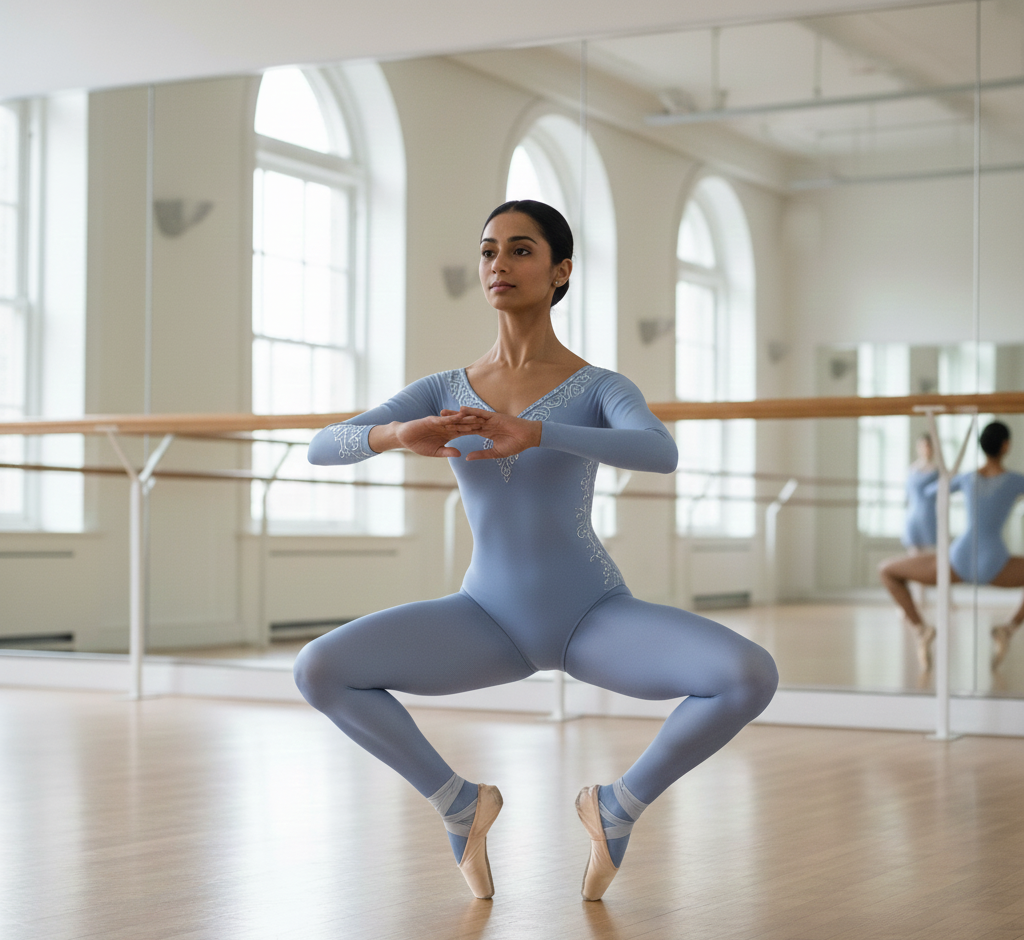
Ballerina’ Squat
When it comes to effective lower-body exercises, the ‘Ballerina’ squat has become a favorite among personal trainers—and for good reason. This elegant-looking move may remind you of a dancer’s poise, but behind its grace lies serious strength, mobility, and balance benefits. Let’s break down why this squat variation deserves a place in your workout routine.
What is the ‘Ballerina’ Squat?
The ‘Ballerina’ squat is a single-leg squat variation that combines traditional squatting mechanics with a focus on control and stability. Unlike a standard squat, where both feet stay planted, the Ballerina squat asks you to shift your weight onto one leg while the other hovers behind you, often with a slight lift or extended arm positioning for added balance.
This move is deceptively simple-looking, but it recruits multiple muscle groups, improves coordination, and challenges your core like few exercises can.
Key Benefits of the ‘Ballerina’ Squat
1. Builds Lower-Body Strength
The Ballerina squat primarily targets the quadriceps, glutes, hamstrings, and calves. Because you are balancing on one leg, each muscle has to work harder to support your body weight. This increases muscle activation compared to a standard squat and helps build stronger, more toned legs over time.
2. Corrects Muscle Imbalances
Many people unknowingly rely more on one leg than the other during regular exercises. The single-leg nature of the Ballerina squat forces each leg to work independently, which helps correct asymmetries, reduce injury risk, and improve overall performance in sports and daily activities.
3. Enhances Core Stability
Balancing on one leg engages your core muscles continuously. Your abs, obliques, and lower back work together to stabilize your torso. This not only strengthens the core but also improves posture, spinal alignment, and overall functional strength.
4. Improves Balance
The hovering back leg and the precise positioning of your body challenge your equilibrium. Practicing this movement regularly improves proprioception—your body’s awareness of its position in space—which translates into better balance in exercises and daily activities like walking on uneven surfaces.
5. Boosts Mobility
The controlled squatting motion stretches and strengthens the hips, knees, and ankles, enhancing joint mobility. Better mobility allows for full range of motion, making other exercises, sports, and everyday movements easier and safer.
6. Develops Coordination
The Ballerina squat requires precise control of your limbs, core, and posture. This improves neuromuscular coordination, which means your muscles and brain work together more efficiently—beneficial for athletes, dancers, and anyone aiming for better movement quality.
7. Functional Fitness
Because this exercise mimics real-life movements—like bending, lifting, or stepping—it enhances functional strength. Practicing it can make everyday activities, such as climbing stairs or carrying groceries, easier and less injury-prone.
8. Low-Impact Exercise
Unlike heavy barbell squats, the Ballerina squat is gentle on the joints. It strengthens the muscles supporting your knees, hips, and ankles without putting excessive stress on them, making it a great option for all fitness levels, including those recovering from injuries.
9. Adaptable for All Levels
The move is highly versatile. Beginners can use a wall or chair for support, while advanced exercisers can add weights, slow pulses, or balance challenges to increase intensity. This makes it accessible and scalable for everyone.
10. Time-Efficient
This single exercise combines multiple fitness benefits: strength, balance, mobility, and core activation. Instead of doing separate exercises for each component, the Ballerina squat allows you to train multiple aspects simultaneously, saving time while giving great results.
How to Perform the ‘Ballerina’ Squat
Here’s a simple step-by-step guide:
Start Position: Stand tall with feet hip-width apart. Shift your weight onto your left leg.
Lift Back Leg: Slightly lift your right leg behind you, keeping it straight or slightly bent.
Squat Down:
Lower your body slowly by bending the supporting leg, keeping your chest upright and core engaged.
Return
: Press through your left heel to return to the starting position.
Switch Sides:
Repeat on the opposite leg
5 essential tips for success with the ‘Ballerina’ squat:
. Focus on Controlled Movements
Don’t rush through the squat. Move slowly and deliberately, both while lowering and rising. Controlled movements ensure your muscles are fully engaged, improve balance, and reduce the risk of injury. Speed comes later, once you’ve mastered form.
2. Engage Your Core
Your core muscles—including abs, obliques, and lower back—act as the body’s stabilizer. Tighten your core throughout the movement to maintain balance, protect your spine, and improve overall posture. Think of “bracing” your stomach as if preparing for a gentle punch.
3. Maintain Proper Knee and Foot Alignment
Ensure your knee tracks over your toes and doesn’t collapse inward or outward. Press your weight through the heel of the supporting leg to activate glutes and quads properly. Correct alignment prevents joint stress and maximizes strength gains.
4. Use Support if Needed
If you’re a beginner or struggle with balance, hold onto a wall, chair, or countertop. Support helps you focus on proper form and gradually builds stability until you can perform the squat confidently on your own.
5. Start Shallow, Progress Gradually
Begin with partial squats to develop strength, balance, and mobility. As your muscles adapt, increase the depth and duration of each squat. Gradual progression prevents strain and ensures long-term improvement.
Variations to Try
- Arms Extended: Stretch your arms forward or to the sides to make balancing more challenging.
- Weighted: Hold a dumbbell or kettlebell in front of you to increase resistance.
- Pulse Squat: Add small pulses at the bottom to intensify the burn.
Why PTs Recommend It
Personal trainers love the Ballerina squat because it’s efficient, functional, and adaptable. It works multiple fitness components at once—strength, mobility, core stability, and balance—making it a time-saving and results-driven exercise.
Whether you’re a beginner or a seasoned athlete, adding the ‘Ballerina’ squat to your routine can enhance your performance, prevent injuries, and even add a touch of elegance to your workout.
Conclusion:
The ‘Ballerina’ squat proves that an exercise can be graceful and functional at the same time. By building strength, improving mobility, and challenging your balance, it’s a versatile
| Benefit | Details |
| Strength | Single-leg stance targets quads, glutes, hamstrings, and calves, building lower-body power and correcting muscle imbalances. |
| Mobility | Controlled movements enhance hip, knee, and ankle flexibility, improving overall range of motion and functional movement. |
| Core Stability | Engages abs, obliques, and lower back, improving posture, spinal support, and overall body control. |
| Balance & Coordination | Hovering back leg and precise positioning challenge stability and body awareness, reducing risk of falls and improving movement efficiency. |
| Functional Fitness | Mimics real-life movements, making activities like walking, climbing stairs, or lifting objects easier and safer. |
| Adaptable for All Levels | Can be modified with support, weights, pulses, or arm variations, suitable for beginners to advanced trainees. |
| Time-Efficient | Combines multiple benefits—strength, mobility, balance, and core activation—into a single exercise. |
Questions & Answers
1. What is the Ballerina squat?
Answer: A single-leg squat variation that builds strength, mobility, and balance simultaneously.
2. Which muscles are primarily targeted?
Answer: Quadriceps, glutes, hamstrings, and calves.
3. How does the Ballerina squat help correct muscle imbalances?
Answer: Each leg works independently, ensuring even strength development.
4. Which muscles are engaged for core stability?
Answer: Abs, obliques, and lower back.
5. Why is it considered a balance-challenging exercise?
Answer: The hovering back leg requires precise body control, improving stability.
6. How does it improve mobility?
Answer: By stretching and strengthening the hips, knees, and ankles.
7. Why is it low-impact?
Answer: It strengthens muscles without putting excessive stress on joints.
8. What makes it functional for daily activities?
Answer: It mimics movements like bending, lifting, and stepping.
9. How can beginners perform this exercise safely?
Answer: Use support such as a wall, chair, or countertop.
10. What is the proper breathing technique?
Answer: Inhale while lowering, exhale while rising.
11. How should the chest be positioned?
Answer: Keep the chest upright to maintain proper spinal alignment.
12. What is the recommended foot placement?
Answer: Press through the heel of the supporting leg while hovering the back leg.
13. Why is slow movement important?
Answer: It ensures full muscle engagement and prevents injury.
14. How does the Ballerina squat improve coordination?
Answer: It requires precise control of limbs, core, and posture.
15. What advanced variations can increase difficulty?
Answer: Adding weights, pulses at the bottom, or arm extensions.
16. Can this exercise be done at home?
Answer: Yes, it requires no special equipment.
17. How often should one practice it for best results?
Answer: 2–3 times per week as part of a lower-body routine.
18. What is the benefit of pressing through the heel?
Answer: Activates glutes and quads effectively while protecting the knee.
19. How does it help posture?
Answer: Engaging the core and keeping the chest upright supports spinal alignment.
20. Why is it time-efficient?
Answer: Combines strength, mobility, balance, and core activation in one exercise.
21. How can depth be adjusted?
Answer: Beginners start with shallow squats; advanced users can go deeper.
22. Is this exercise suitable for athletes?
Answer: Yes, it improves functional strength, balance, and coordination.
23. How does it prevent injuries?
Answer: Strengthens supporting muscles around joints and improves stability.
24. Can it be incorporated into warm-ups?
Answer: Yes, partial squats can prepare muscles and joints for other exercises.
25. How does it compare to regular squats?
Answer: Single-leg stance increases muscle activation and challenges balance more.
26. What role do the arms play?
Answer: Arms can be extended forward or sideways to further challenge balance.
27. How does the Ballerina squat affect daily life?
Answer: Enhances strength, mobility, and balance, making everyday movements easier.
28. Why is proper knee alignment important?
Answer: Prevents strain and injury while maximizing muscle activation.
29. Can it be modified for joint issues?
Answer: Yes, using support or reducing squat depth reduces stress on joints.
30. Why do personal trainers recommend it?
Answer: It’s a versatile, full-body exercise that efficiently builds strength, mobility, balance, and core stability.

2 comments
[…] 10 Best Arm Exercises for Over […]
[…] You Need It: Pull-ups strengthen upper body and core muscles and improve grip […]